









Manuals & Resources
Cannabis Cuttings: How to Clone Your Favourite Plant
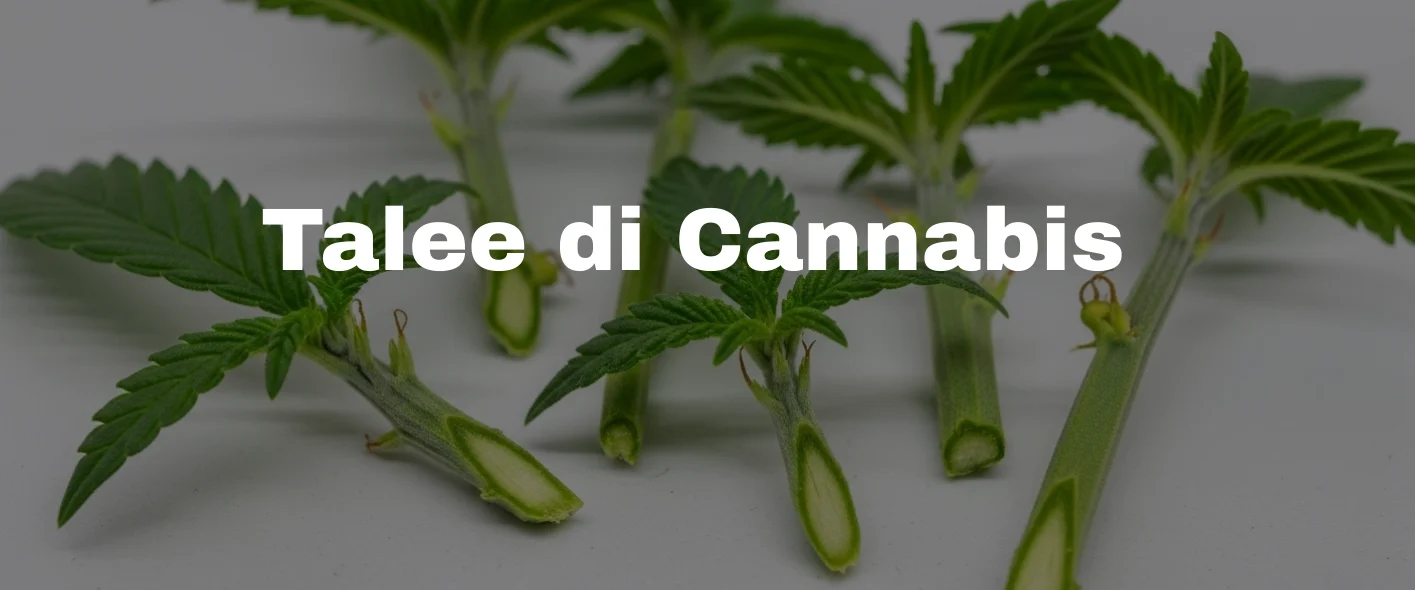
There’s a moment during cultivation when something special happens. You’re looking at one of your plants — the one that grows best, the one with that unforgettable aroma, the one that gives you exactly what you’re looking for every cycle — and you ask yourself a simple question: what if I could have it forever?
The answer is called a cutting. And in this article we’ll tell you everything you need to know to do it right.
What exactly is a cutting?
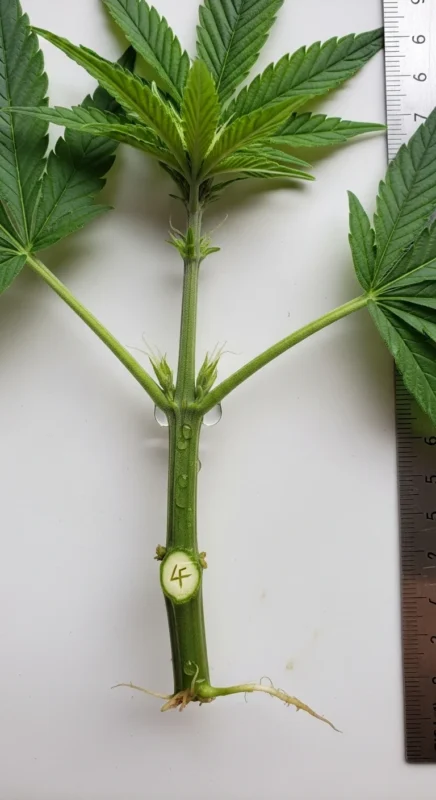
A cutting, also known as a clone, is a small branch taken from a mother plant that, once rooted, becomes a new plant. Genetically identical to the original. Same potency, same aromatic profile, same growth structure.
It’s not magic — it’s plant biology. Plants have the extraordinary ability to regenerate from a single piece of tissue. Humans have been exploiting this property for millennia, in agriculture, floriculture and viticulture. And of course in the world of cannabis.
The difference compared to seed cultivation is fundamental: with a seed you get a new genetic combination, with some surprises (good or bad) every cycle. With a cutting you get an exact copy of the plant you already know and love. If you want to explore the genetic differences between varieties, read our complete guide to autoflowering seeds.
Why take cuttings instead of starting from seeds?
Before getting into the practical side, it’s worth really understanding why so many growers choose cloning as their main method.
You save time. A rooted cutting skips the germination stage and the first weeks of growth entirely. You can have plants ready to transplant in 10-15 days.
You preserve the genetics. Found an exceptional phenotype? A plant with unique characteristics you’d never find again buying new seeds? The cutting preserves it indefinitely.
You save money. A well-managed mother plant can produce dozens of cuttings per cycle, without you having to buy new seeds every time.
Harvest uniformity. All plants grow at the same rate, flower together, ripen together. For anyone growing in an organised way, this is a huge advantage.
The mother plant: the heart of everything
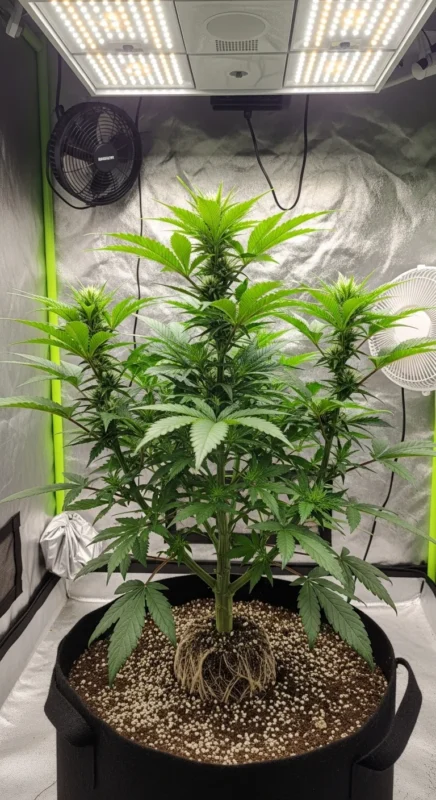
Every good cutting starts with a good mother plant. This is the starting point, and there are no compromises.
The ideal mother plant is in the vegetative stage, healthy, free from pests or diseases, with good lateral branch development. It should be at least 2-3 months old — this is when it’s at its peak vegetative vigour, with strong roots and tissue ready to regenerate.
Something often overlooked: the mother plant must be kept always in the vegetative stage, with a light cycle of 18 hours on and 6 off. If it were to enter flowering, the cuttings taken would have a much harder time rooting.
Choose healthy, young lateral branches, preferably those receiving less direct light. Lower branches are often the most suitable: less lignified, more tender, they root faster.
What you need: the right tools
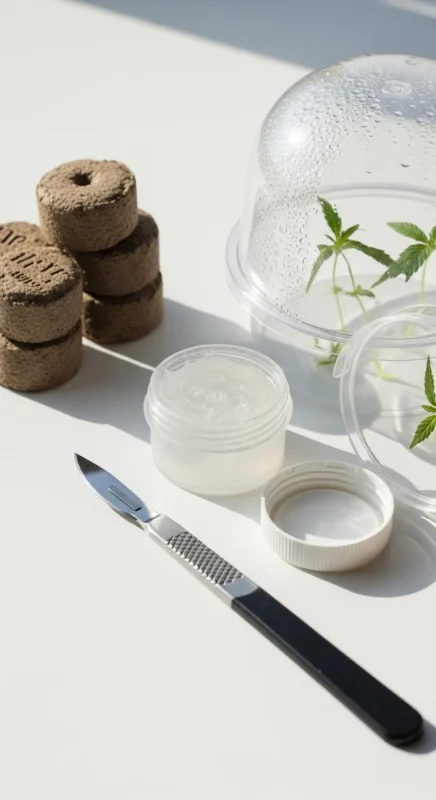
You don’t need professional equipment to take good cuttings. But some things really do make a difference:
Sharp, sterile cutting tool. A scalpel is ideal. Alternatively, a craft knife. Never scissors, which crush the tissue instead of cutting it cleanly. Disinfect it with alcohol or diluted hydrogen peroxide (10% H₂O₂ and 90% water).
Rooting gel or hormone. Stimulates root formation and significantly increases the success rate. Gel is easier to use than powder. Put a small amount in a separate container — never dip the cutting directly into the original bottle.
Rooting substrate. The main options are: rockwool cubes, peat jiffy pellets, or perlite. All provide good aeration and moisture retention. Jiffy pellets should be hydrated before use with pH 6 water.
Propagator or mini greenhouse. Essential for keeping humidity high (80-90%) around the clones during rooting.
Cool white light (6400K). Clones don’t yet have roots to absorb water: too intense a light stresses them. A cool fluorescent light is perfect. To maximise growth after rooting, check out our complete Biobizz guide for optimal organic nutrition.
How to take a cutting: step by step
Now let’s get into it. Follow these steps carefully and your cuttings will have every chance of succeeding.
- Prepare everything before cutting. Sterilise your tools, hydrate the substrates, pour the rooting gel into a container. The time between cutting and inserting into the substrate must be minimal — every second counts.
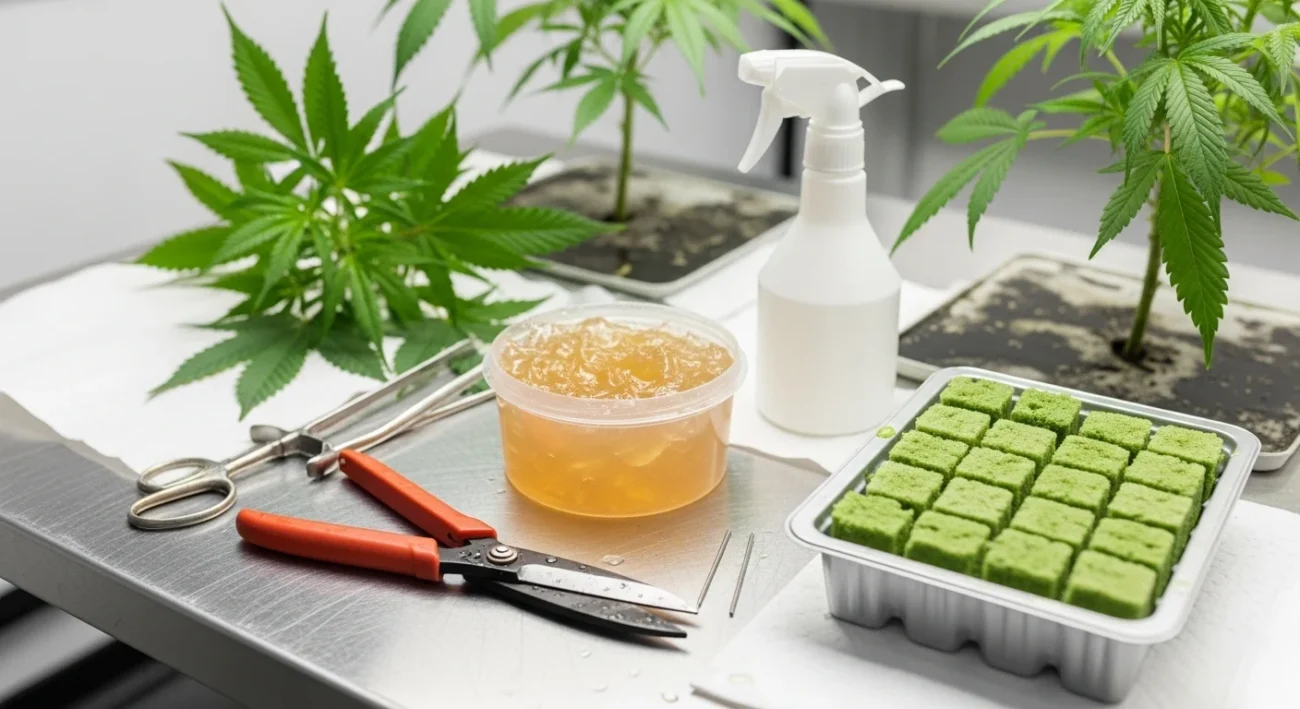
- Choose the branch. Look for a healthy lateral branch, between 7 and 15 centimetres long, with at least two nodes. Gently hold the apical tip upward to tension the branch, so the cut will be cleaner.
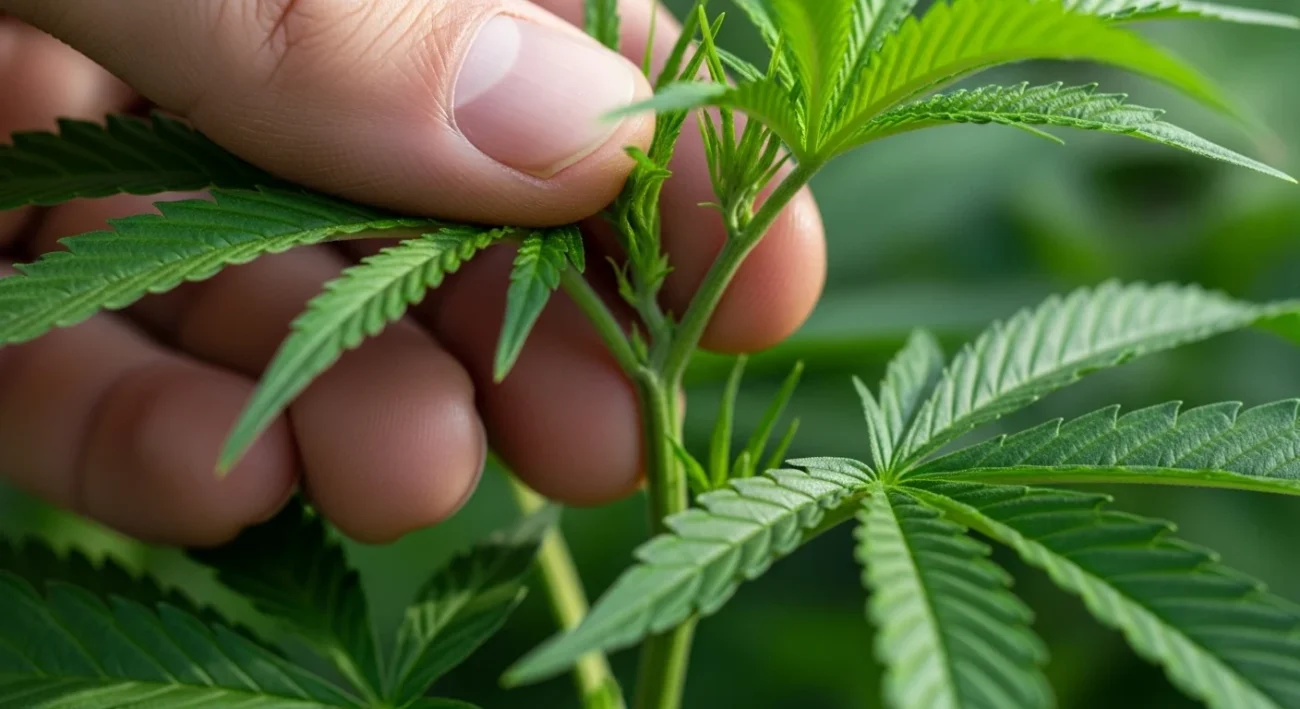
- Cut at a 45° angle. The cut should be made just below a node, at a 45-degree angle. This increases the rooting surface area. Make the cut cleanly and decisively — no hesitation.
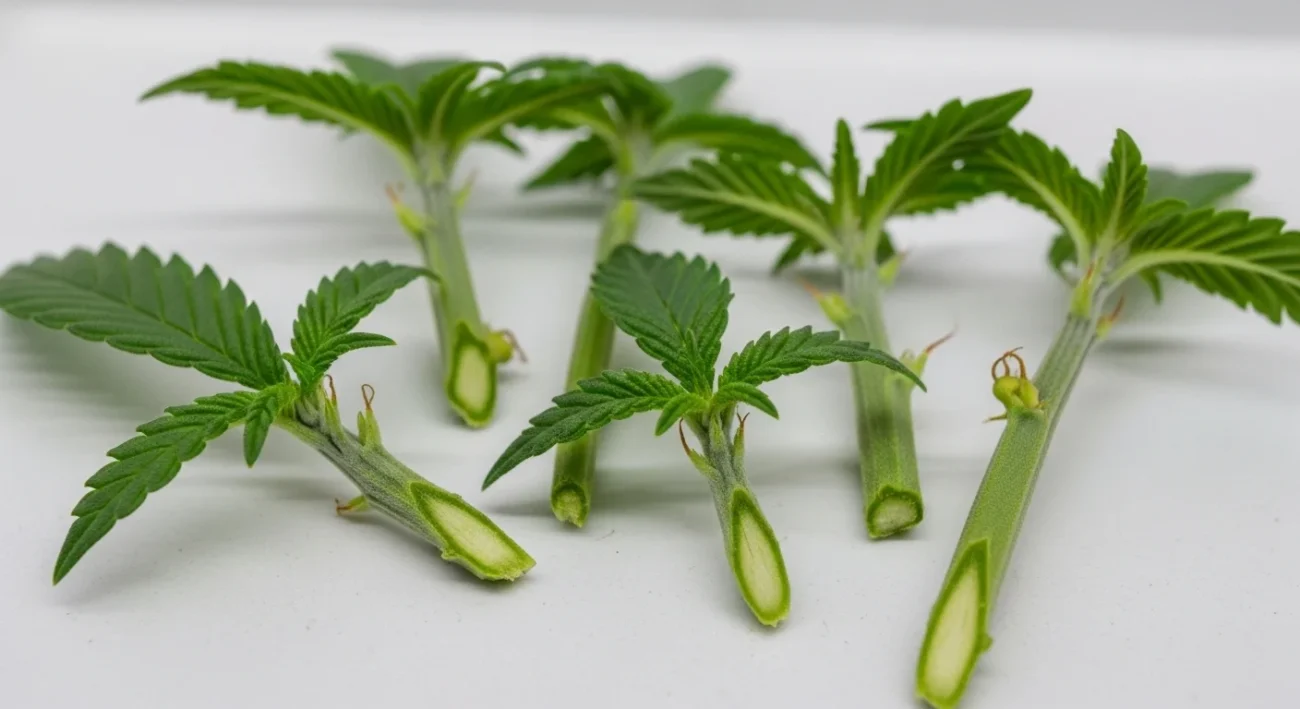
- Immerse immediately in water. As soon as it’s cut, place the base of the cutting in water. This prevents air bubbles from entering the tissue and blocking the rooting process.
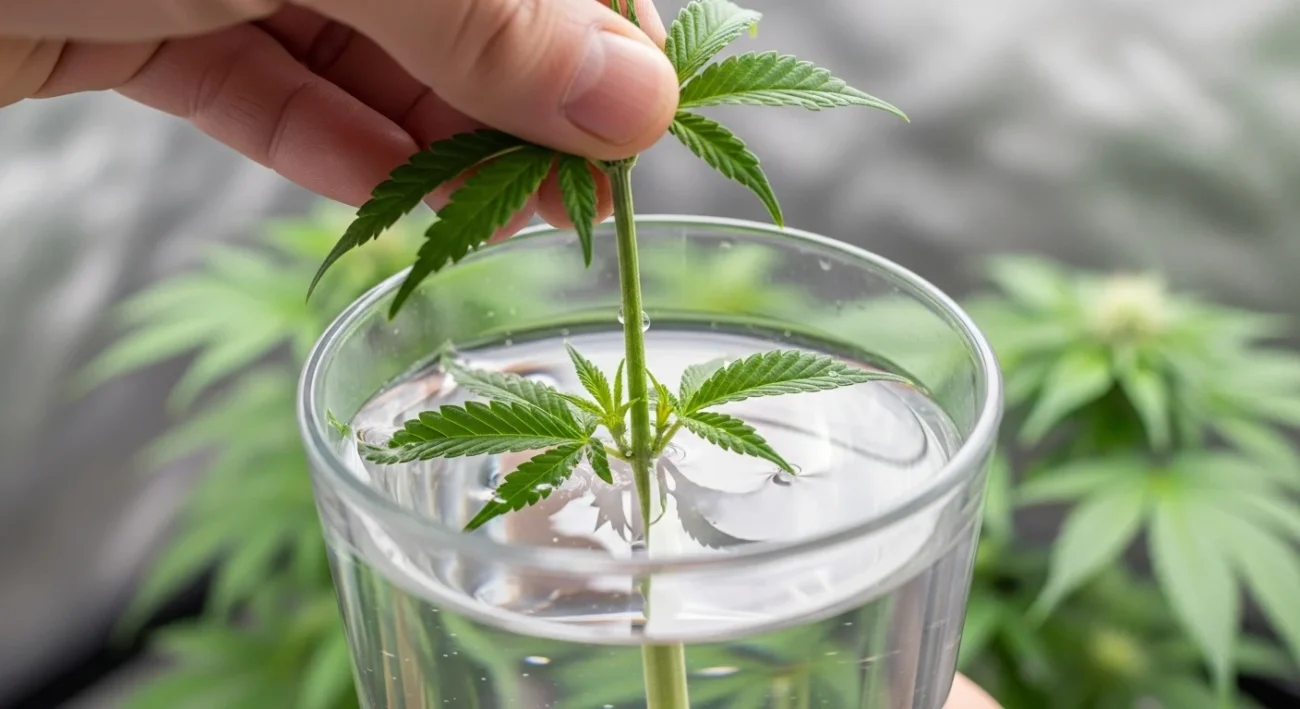
- Prepare the stem. Remove the lower leaves. With the scalpel, gently scrape the lower part of the stem with vertical movements, grazing the white inner tissue (the cambium). This helps the rooting gel penetrate better.
- Trim the leaf tips. Do this now, while the cutting is still in water. It reduces the evaporation surface and allows the plant to focus its energy on rooting.
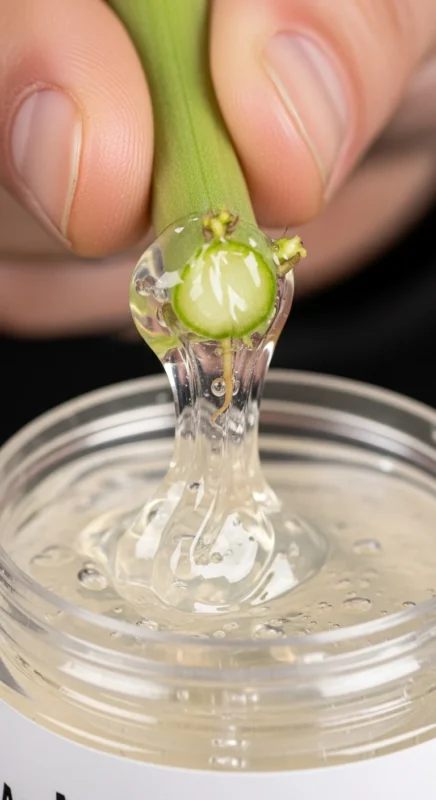
- Apply the rooting gel. Dip the base 2-3 cm. Remove the excess — too much gel can do more harm than good.
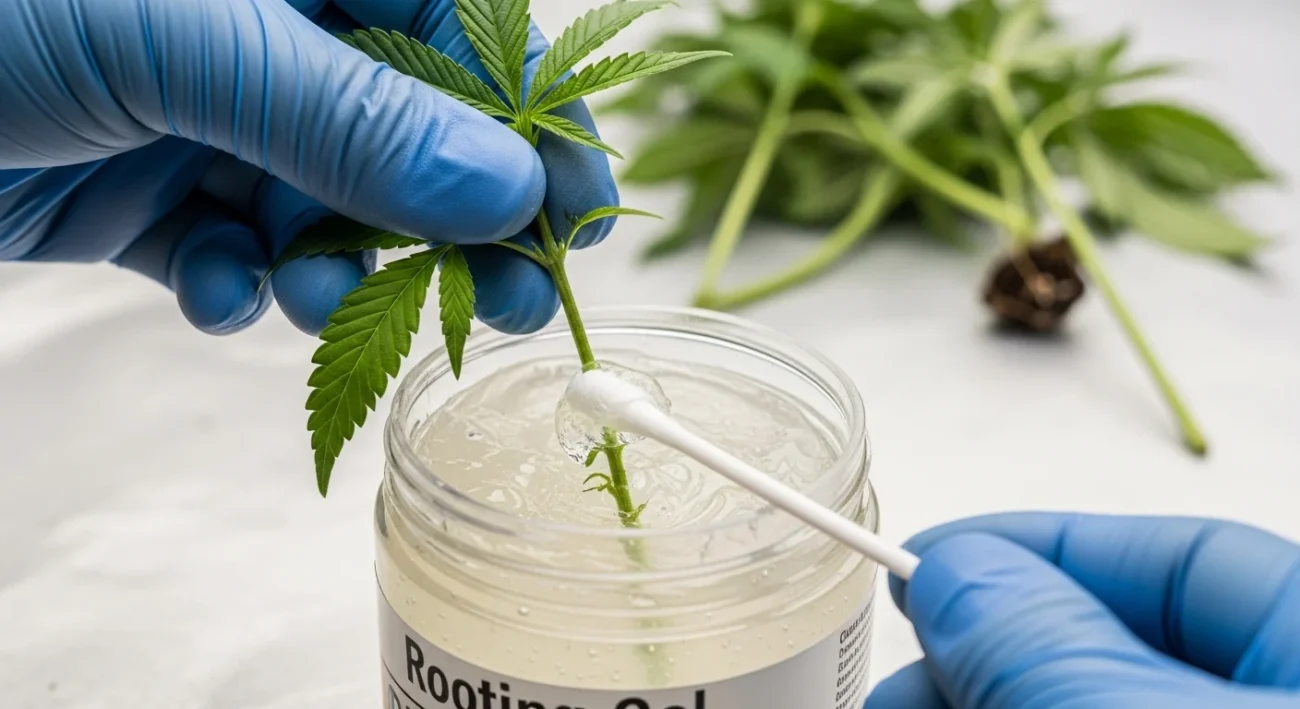
- Insert into the substrate. Make a small hole in the jiffy or cube, then gently insert the cutting. Lightly press the substrate around the stem to eliminate air pockets.
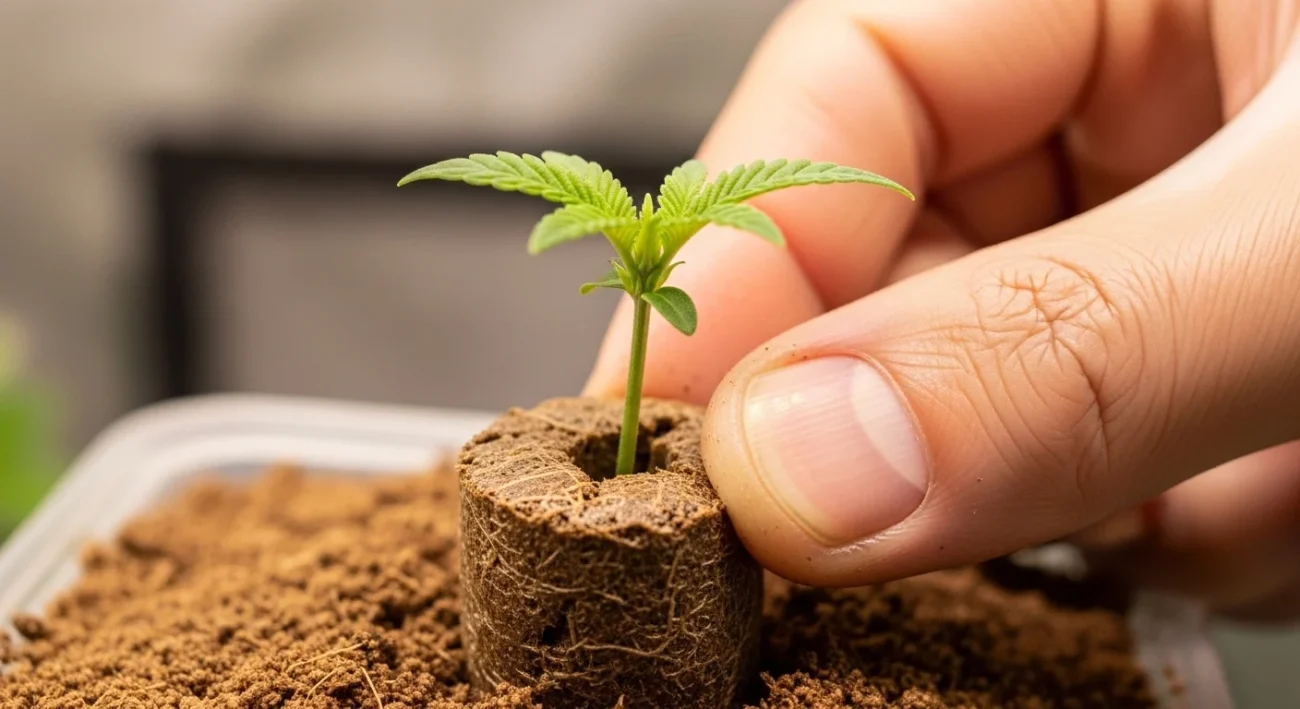
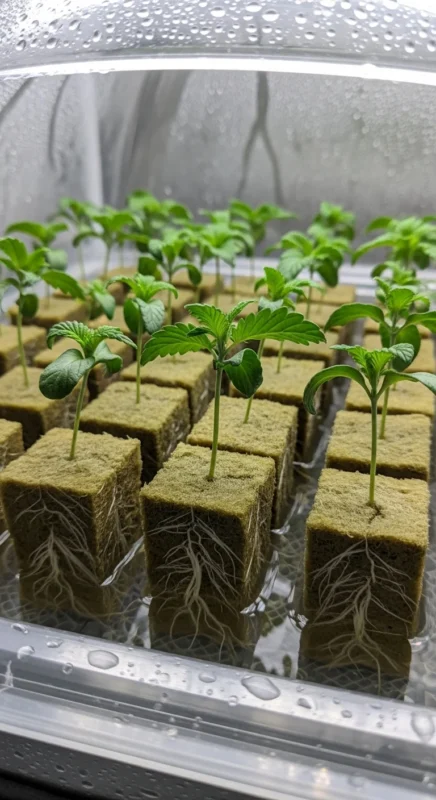
- Place in the propagator. Position the cuttings in the propagator, close the dome and place everything under the cool white light. Ideal temperature: between 22 and 26°C. Humidity: 80-90%.
Rooting: how long does it take?
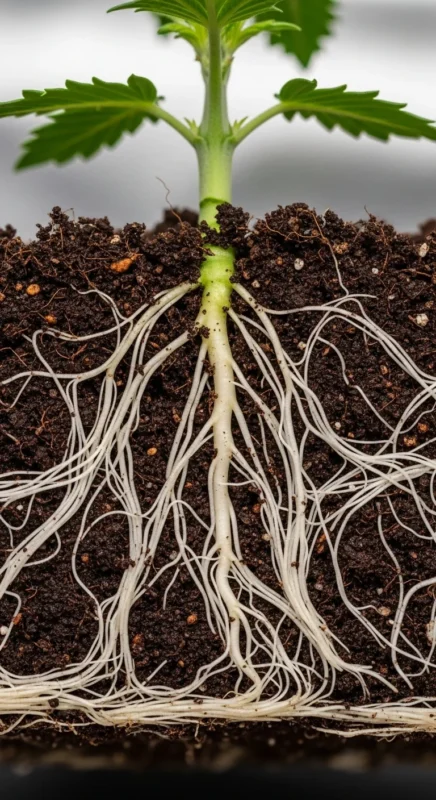
It depends on the variety and conditions, but in general you can expect visible roots between 7 and 15 days. Some more robust varieties or those with more lignified stems may take a few days longer.
How do you know roots are forming? Observe the cutting: if the leaves remain turgid and the plant shows new apical growth, that’s a very good sign. If the leaves yellow or curl, something is wrong.
When roots emerge from the substrate holes — or are visible in the water if you used the hydro method — it’s time to transplant.
The most common mistakes (and how to avoid them)
Humidity too low. Without roots, the cutting can’t absorb water from the substrate. The only source of hydration is the leaves. If the air is too dry, the plant wilts before it even gets started.
Light too intense. Clones can’t handle HPS or powerful LED lights. Always start with gentle light.
Unsterile tools. A contaminated knife can transmit fungi, bacteria or viroids directly to the cutting. Always sterilise.
Too much rooting gel. More is not better. An excess can suffocate the stem and prevent rooting.
Taking cuttings from flowering plants. It can be done, but the cuttings will need 2-3 weeks to return to vegetative stage.
Substrate too wet. Roots need oxygen. A waterlogged substrate suffocates the cutting instead of helping it.
Cutting or seed: which to choose?
There’s no universal answer. It depends on what you’re looking for.
A cutting is the right choice when you want to preserve genetics you already know, optimise cultivation times and have uniform harvests cycle after cycle.
A seed is the right choice when you want to explore new genetics, do breeding, or simply enjoy the surprise of a phenotype you’ve never seen before.
Many growers use both: seeds to find the exceptional plant, cuttings to replicate it endlessly. And if you want to further optimise your yield, combine the cutting technique with Low Stress Training (LST).
Conclusion
Taking cuttings is one of the most satisfying techniques in all of cultivation. There’s something deeply rewarding about watching a simple branch transform into a plant identical to its mother — same genetics, same character, same potential.
It’s not difficult. It requires attention, clean tools and a little patience in the days following the cut. But once the roots emerge from the substrate and the plant begins to grow, you know you’ve done everything right.
And that plant you love so much? You can have it again and again.
Frequently Asked Questions
How long does it take for a cannabis cutting to root?
Under optimal conditions — temperature between 22 and 26°C and humidity at 80-90% — the first roots are visible in 7-15 days. If after 3 weeks you see no roots, there’s likely a problem with humidity, temperature or tool sterility.
Can you take cuttings from a flowering plant?
Yes, technically it’s possible, but it’s not ideal. Cuttings taken during flowering root more slowly and must return to the vegetative stage — a process that takes an extra 2-3 weeks.
What is the best substrate for rooting cuttings?
The most commonly used are rockwool cubes and peat jiffy pellets. The important thing is that the substrate is never waterlogged — roots need oxygen to develop properly.
Is rooting gel necessary for cuttings?
It’s not strictly essential, but it significantly increases the success rate. If you’re new to this, using it is strongly recommended.
How many cuttings can you take from a mother plant?
A well-managed mother plant can produce dozens of cuttings per cycle. Don’t take more than 30-40% of the branches in one session.
Does the cutting have the same potency as the mother plant?
Yes. Being a genetically identical clone, the cutting inherits all the characteristics of the mother plant — including the cannabinoid profile, terpenes and growth structure.
What to do if cutting leaves turn yellow?
Slight yellowing of the lower leaves in the first weeks is normal. If all leaves yellow or curl, check: humidity (too low), temperature, light (too intense) or substrate (too wet).
⚖️ Legal Notice and Disclaimer
This article is written exclusively for informational and educational purposes. BuDream does not encourage, promote or facilitate illegal activities. Cannabis cultivation is subject to different regulations depending on the country and jurisdiction. It is the sole responsibility of the reader to verify and comply with applicable local laws before putting any technique described in this article into practice. BuDream disclaims all liability for any use of the content that does not comply with the laws in force in the reader’s country.

 Seed Shop
 Head Shop
 Vaporizers
 Cosmetics
 Growshop
 Grow Box
 Ornamental plants
 Fans and extractors
 Pots
Pots LED lamp
 Fertilizer
 Pest control