






Manuals & Resources
Cannabis Grow Lights: Complete Guide to Cycles, Types and Distance
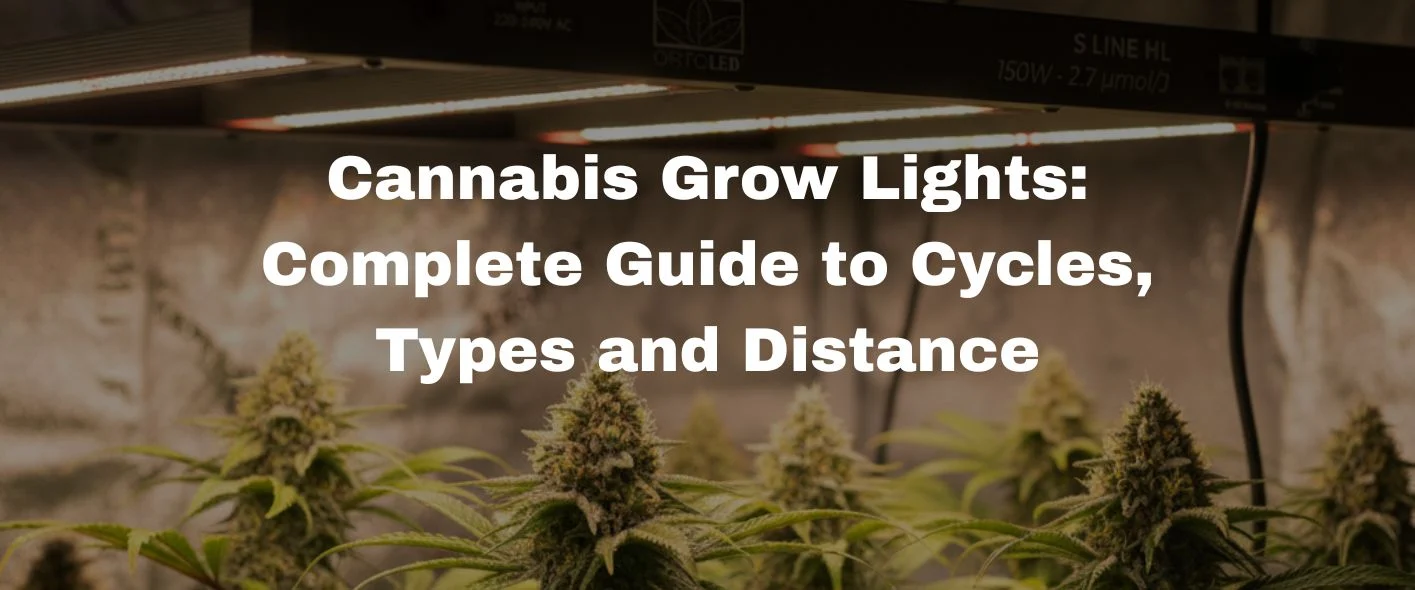
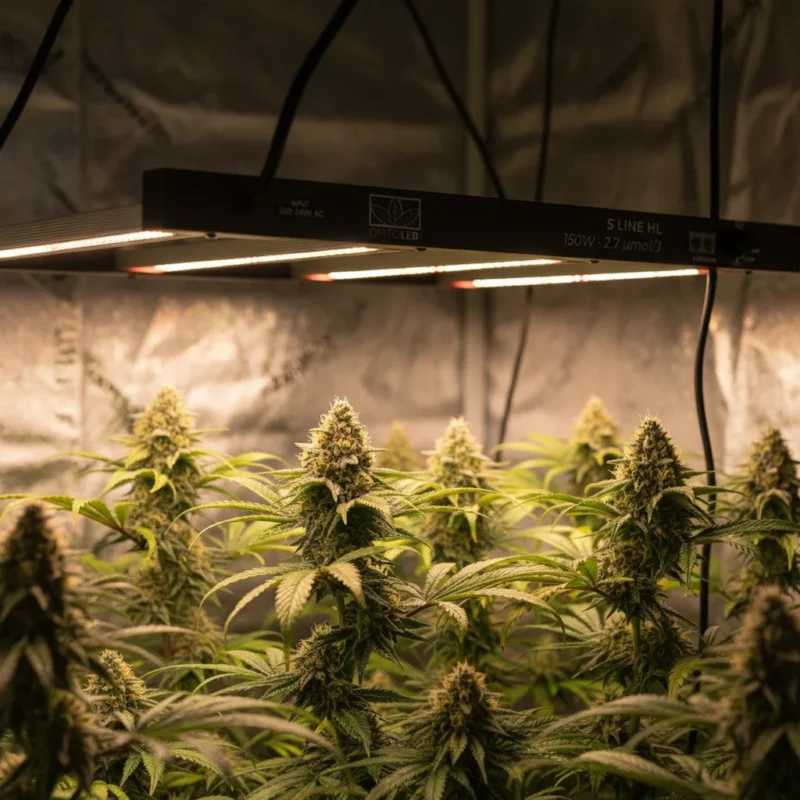
Light is the engine of everything. Even before nutrients, even before the substrate, it is light that determines whether a cannabis plant will grow healthy and productive or struggle without ever expressing its true potential.
Yet it is one of the aspects that beginner growers tend to underestimate. You buy a light, switch it on and hope for the best. Those who have been growing for a while know things work differently: choosing the right lamp, setting the correct cycle and managing the distance from the canopy are decisions that have a concrete impact on the quality and quantity of the harvest.
In this guide we explain everything you need to know.
Why light is so important for cannabis
Plants use light for photosynthesis, the process by which they convert carbon dioxide and water into sugars. The more quality light a plant receives, the more energy it produces, and the more that energy translates into growth, structure and ultimately resin and flowers.
But cannabis does not use light only as an energy source. It also uses it as a biological clock. The duration of the light period, called the photoperiod, is the signal that tells the plant what season it is in. When the light hours are long, the plant understands it is spring or summer and continues to grow. When the light hours shorten, it understands it is autumn and begins to flower.
This mechanism is the basis of all indoor cultivation phase management. To learn more about what changes between the two phases, read our complete guide on the vegetative stage and flowering.
Light cycles: 18/6 and 12/12
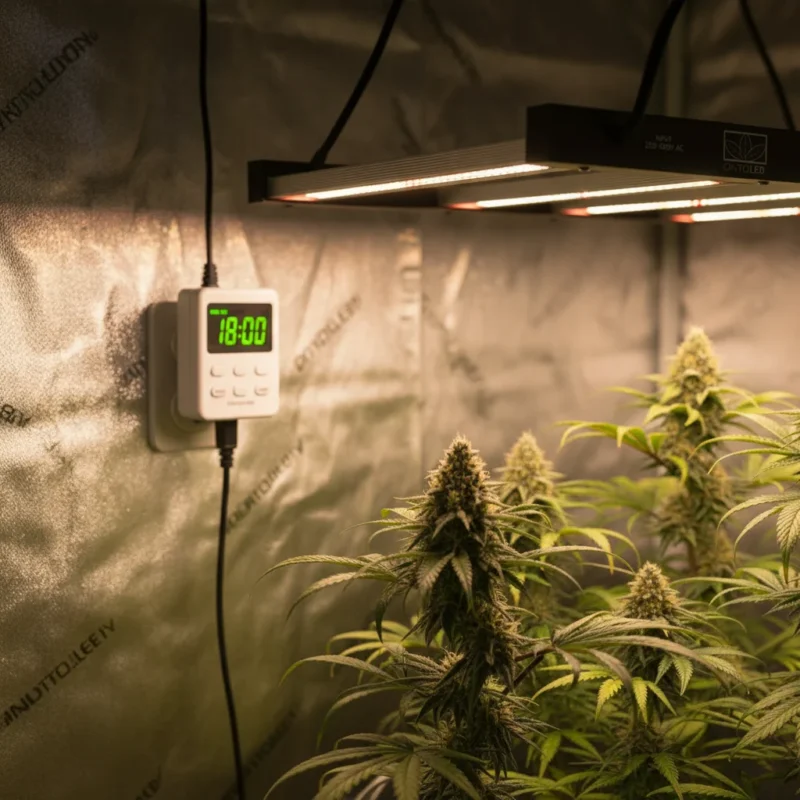
18/6 cycle: vegetative stage
The 18 hours of light and 6 hours of darkness cycle is the standard photoperiod for the vegetative stage. It simulates the long summer days and tells the plant to keep growing in height and leaf mass without yet thinking about flowers.
Some varieties respond well to even more intense cycles, such as 20/4 or even 24/0, meaning continuous light. This can accelerate growth, but is not always advisable: plants benefit from the dark period to rest and consolidate growth. 18/6 remains the ideal compromise for most varieties.
The 18/6 cycle is also used to keep mother plants from which cannabis cuttings are taken, which must remain in the vegetative stage to root correctly.
12/12 cycle: flowering
Switching to 12 hours of light and 12 hours of darkness is how flowering is triggered in photoperiod varieties indoors. It simulates the shortening of autumn days and activates the reproduction mechanism in the plant’s genes.
From this moment the plant stops growing in height and begins to concentrate all its energy on flower production. The cycle must be followed precisely. Even a small interruption of the dark hours, for example light filtering through a window, can stress the plant and in the worst cases cause hermaphroditism.
Cycle for autoflowering varieties
Autoflowering varieties do not depend on the photoperiod. They flower automatically after about 3-4 weeks, regardless of the light received. For this reason they are grown with a fixed cycle of 18-20 hours of light throughout the life cycle, without ever needing to change the photoperiod. To learn more about autoflowering varieties, read our complete guide to autoflowering seeds.
Types of grow lights: which to choose
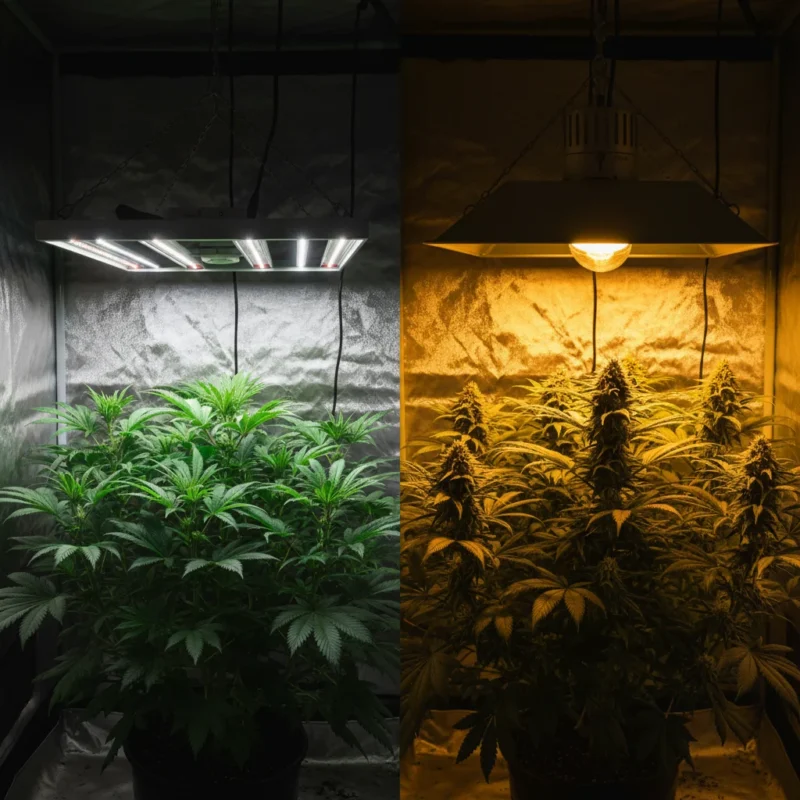
Not all lights are equal. Each technology has different characteristics in terms of spectrum, consumption, heat produced and cost. Here is a complete overview.
HPS lights (high pressure sodium)
HPS lights have been the reference point for indoor cultivation for decades. They produce intense light in the yellow and red frequencies (around 2200K), particularly effective for flowering. Many growers still consider them unbeatable for raw flowering yield.
Their main limitation is the heat produced: a 600W HPS significantly heats the environment and requires an adequate ventilation system. They consume a lot of electricity and bulbs need replacing every 12 months or so to maintain efficiency.
They are still a valid choice for those with large spaces or who grow in cold environments where the heat produced by the lamp is an advantage.
MH lights (metal halide)
MH lights produce a cooler, bluer light (around 4000-6500K), ideal for the vegetative stage. They stimulate compact growth with tight internodes and dense foliage. Many growers use MH in vegetative and then switch to HPS for flowering.
Like HPS, they produce a lot of heat and require periodic bulb replacement.
LED lights
LEDs are today the most popular choice among modern growers. The latest generation full spectrum models can accompany the plant from start to finish of the cycle, covering both the blue frequencies needed for vegetative growth and the red ones essential for flowering.
The main advantages are low energy consumption compared to HPS, long lifespan (over 50,000 hours versus 10,000-20,000 for traditional lamps) and significantly lower heat production. They are also the ideal choice for hydroponic cultivation, where temperature control is essential.
For those wanting a professional and efficient solution, the Ortoled lights are a quality choice. In particular the Ortoled S-Line Bar Light is a high-efficiency LED bar designed to optimise both growth stages.
CFL lights (compact fluorescent)
CFL lights are affordable and easy to find. They produce little heat and can be placed very close to plants without risk of burning. They are available in two versions: cool white at 6500K for vegetative and warm white at 2700K for flowering.
Their limitation is light intensity: they are not powerful enough to support abundant flowering on surfaces larger than half a square metre. They are excellent for germination, seedlings and small grows, but not the right choice for those wanting to maximise yield.
The light spectrum and what it means
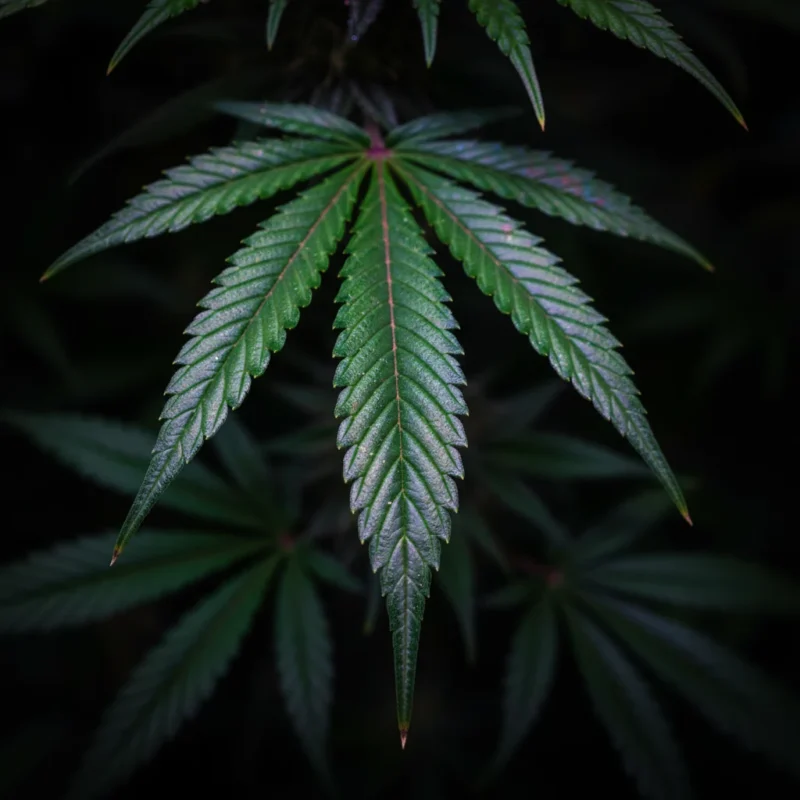
Not all light is equal from the plant’s perspective. Cannabis responds differently to different wavelengths of visible light.
Blue light (400-500nm): stimulates compact and vigorous growth during the vegetative stage. Promotes leaf development and short internodes. This is the spectrum of spring and summer light.
Red light (600-700nm): stimulates flowering and stretching. Promotes flower production and resin synthesis. This is the spectrum of autumn light.
Full spectrum: modern LEDs cover both frequencies and often include UV and infrared too, for more complete growth and greater production of terpenes and cannabinoids.
A full spectrum lamp is the most versatile solution for those wanting to use a single lamp for the entire cycle.
Distance from the plant
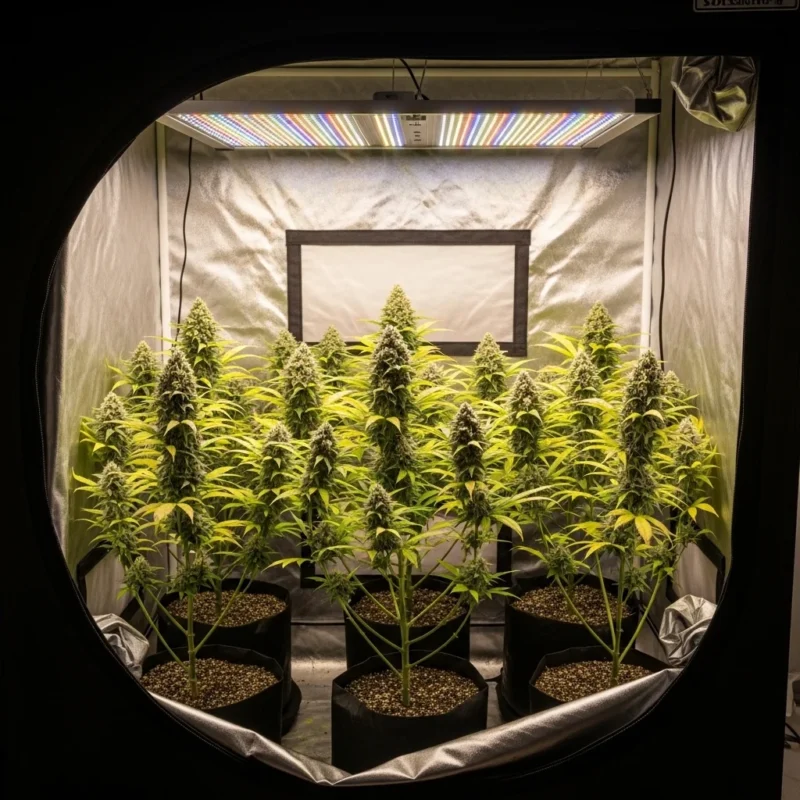
The distance between the lamp and the plant canopy is one of the most important and often overlooked parameters. Too much distance means less light and slower growth. Too close means risk of leaf burn and stress.
LED: between 30 and 60 cm from the canopy, depending on the power. High-efficiency modern LEDs can be kept slightly further away. Always follow the manufacturer’s instructions.
HPS and MH: between 40 and 70 cm, depending on the power. A 600W HPS needs to be kept further away than a 250W because it produces more heat.
CFL: can be placed as close as 5-10 cm without problems, thanks to very low heat output.
A practical way to check if the lamp is too close is to hold the back of your hand near the canopy for 10 seconds: if you feel excessive heat, raise the lamp.
How many light hours for autoflowering varieties
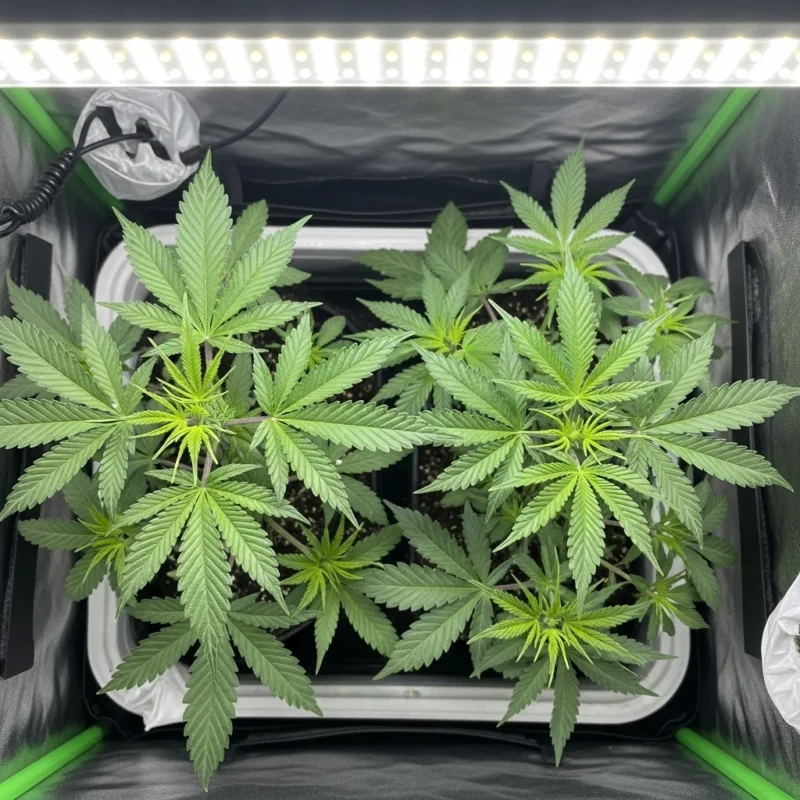
Autoflowering varieties do not require a photoperiod change to flower. The most commonly used cycle is 18 hours of light and 6 of darkness throughout the entire life cycle. Some growers use 20/4 to maximise growth in the first weeks.
The choice of cycle also affects energy costs: a 20/4 cycle consumes more electricity than an 18/6. To find the autoflowering varieties best suited to your grow, take a look at our autoflowering seeds.
Common mistakes with lighting
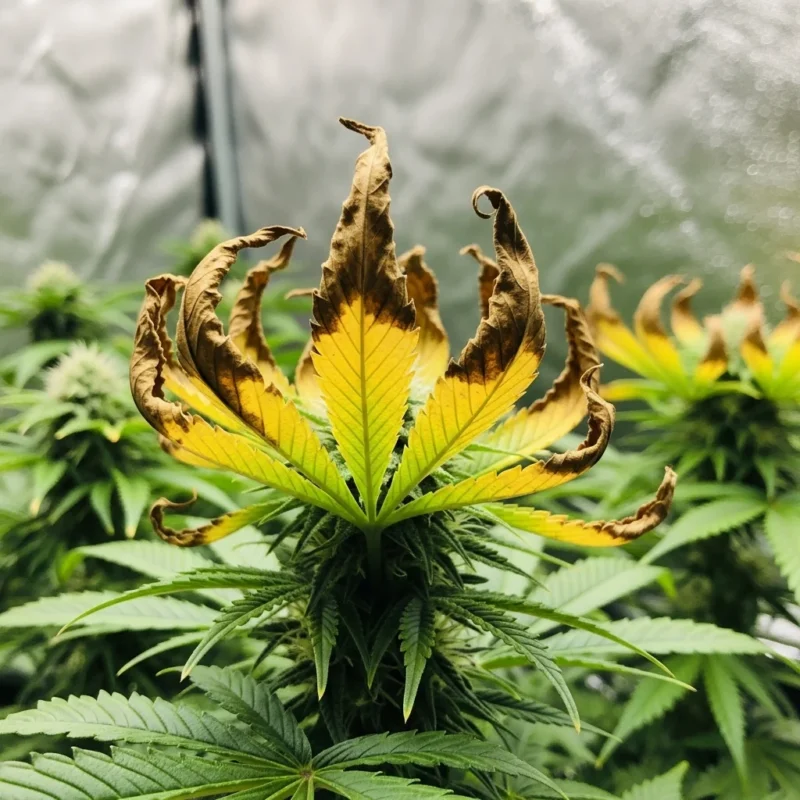
Lamp too close. Leaves curl upward, edges dry out and yellow. The plant shows clear signs of heat or light stress.
Lamp too far. The plant stretches excessively toward the light (etiolation), with long internodes and a weak structure. Buds end up small and sparse.
Imprecise timer. A timer that skips even once can send confusing signals to the plant. During flowering, an interrupted night can cause vegetative reversion or hermaphroditism. Always use quality timers.
Not changing the cycle for flowering. Keeping 18/6 during flowering for photoperiod varieties prevents the plant from flowering correctly. 12/12 is essential.
Using CFL lights throughout flowering. CFLs do not have enough power to support abundant flowering. The buds produced will be small, airy and low in resin.
How to choose the right lamp for your grow
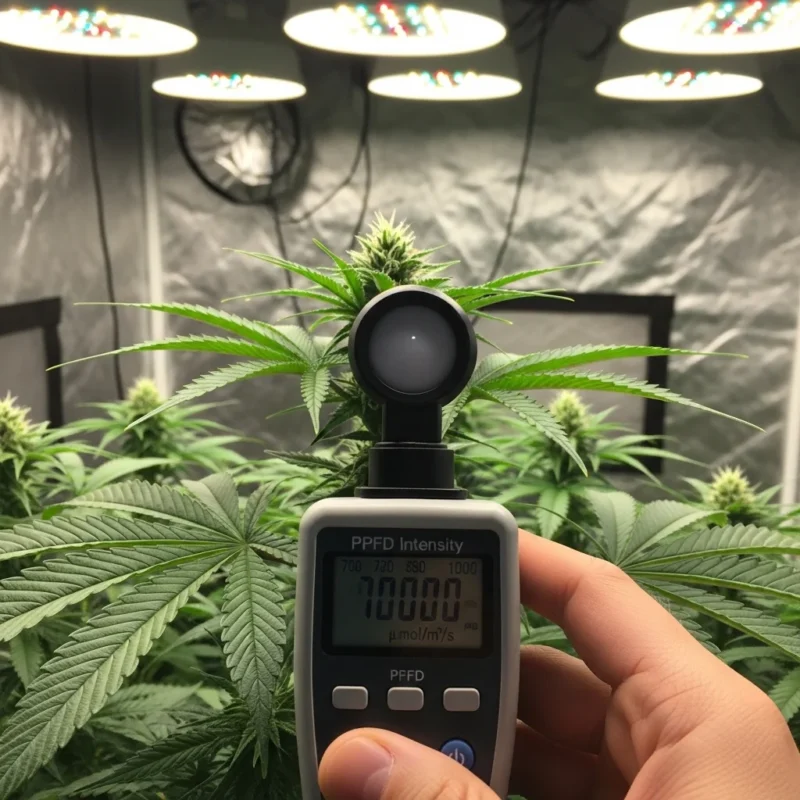
The choice of lamp depends on three main factors: available space, budget and experience.
Small grows (up to 0.5 m²): The Ortoled Quantum Full Cycle 60W with Samsung chip is the ideal entry-level solution, suitable for the full cycle. A step up, the Ortoled Little Monster Quantum Board 100W is dimmable and perfect for compact grow boxes. For targeted supplemental lighting, the Ortoled Spot 20 COB 20W with E27 fitting can be positioned laterally in shadier areas of the grow room.
Medium grows (0.5-1 m²): The Ortoled Quantum Board EVO Samsung from 150 to 320W is perfect for this space. For those preferring LED bars, the Ortoled S-Line Bar Light and its foldable version S-Line Foldable guarantee uniform light distribution across the entire canopy.
Large grows (over 1 m²): The Ortoled S-Line Foldable HL Dual 780W is a professional full cycle solution with integrated UV and IR. Those wanting to illuminate the lower canopy can pair it with the Ortoled Under Canopy LED 120W.
Advanced control: The Ortoled 0-10 PWM Controller allows precise intensity regulation. S-series lamp users can pair it with the dedicated S-Controller for S series. For professional multi-lamp installations, the EC4330 2-channel control unit manages up to 30 lamps with PPFD monitoring and temperature control.
Light is everything, but it is not the only factor
The perfect lamp is not enough on its own. Light works in synergy with all other cultivation elements: nutrients, substrate, pH, temperature and humidity. Every element must be optimised to allow the plant to make full use of the light it receives.
To maximise yield even further, combine good lighting with techniques like Low Stress Training (LST), which allows uniform canopy light exposure. And always pair it with good organic nutrition, such as that offered by the Biobizz range, to allow the plant to convert light into energy at maximum efficiency.
Light is the starting point. Everything else is the team that supports it.
Frequently Asked Questions
How many light hours does cannabis need in the vegetative stage?
In the vegetative stage the standard cycle is 18 hours of light and 6 of darkness. Some growers use 20/4 to accelerate growth, but 18/6 remains the ideal compromise for most varieties. Continuous light 24/0 is possible but not always advisable as plants benefit from the nightly rest period.
What is the difference between LED and HPS for cannabis?
HPS produces intense light in the red and yellow spectrum, great for flowering, but consumes a lot of electricity and generates high heat. Modern full-spectrum LEDs cover both stages with up to 50% lower consumption, lifespan over 50,000 hours and much lower heat. The initial cost of LEDs is higher but is recovered over time through energy savings.
How do you trigger flowering with lights?
In photoperiod varieties, flowering is triggered simply by changing the cycle from 18/6 to 12/12, meaning 12 hours of light and 12 of darkness. This simulates the arrival of autumn. The cycle must be precise and consistent: even a small interruption of the dark period can stress the plant or cause hermaphroditism.
How far should an LED lamp be from cannabis?
For LEDs the ideal distance is between 30 and 60 cm from the canopy, varying by lamp power. High-efficiency models can be kept slightly further away. Always consult the manufacturer’s instructions. A practical test: hold the back of your hand near the canopy — if you feel excessive heat after 10 seconds, raise the lamp.
Are CFL lights suitable for the entire cannabis grow?
CFLs are excellent for germination, seedlings and small vegetative grows, but lack the power to support abundant flowering on surfaces above 0.5 m². Buds grown under CFLs tend to be small and low in resin. For flowering, LEDs or HPS are far more effective.
What light cycle do autoflowering plants use?
Autoflowering plants do not depend on photoperiod and are grown with a fixed cycle of 18-20 hours of light throughout the entire life cycle, from germination to harvest. No photoperiod change is needed to trigger flowering: the plant follows its own internal biological clock.
What happens if I interrupt the dark period during flowering?
Any interruption of the dark period during flowering, even brief, sends a confusing signal to the plant. It can cause stress, slowed flowering and in the worst cases hermaphroditism. It is essential to use a reliable timer and ensure the grow room is completely blacked out.
⚖️ Legal Notice and Disclaimer
This article is written exclusively for informational and educational purposes. BuDream does not encourage, promote or facilitate illegal activities. Cannabis cultivation is subject to different regulations depending on the country and jurisdiction. It is the sole responsibility of the reader to verify and comply with applicable local laws before putting any technique described in this article into practice. BuDream disclaims all liability for any use of the content that does not comply with the laws in force in the reader’s country.
 Seed Shop
 Head Shop
 Vaporizers
 Cosmetics
 Growshop
 Grow Box
 Ornamental plants
 Fans and extractors
 Pots
Pots LED lamp
 Fertilizer
 Pest control