



CBD in Humans and Animals: What Science Actually Says
 Claude
 Perplexity
CBD, or cannabidiol, is one of the most studied molecules of recent years. It is talked about everywhere: in pharmacies, specialist shops, wellness magazines and increasingly in veterinary clinics too. Yet between exaggerated enthusiasm and excessive scepticism, understanding what science actually says about CBD is not always straightforward.
In this article we gather what scientific research has so far shown: how CBD acts on the body, in which areas studies on humans and animals exist, and what the limits of current knowledge are.
What is CBD
CBD is one of over 100 cannabinoids found in the cannabis plant. Unlike THC (tetrahydrocannabinol), CBD has no psychotropic effects: it does not alter perception, does not create dependency and does not produce the typical “high” associated with recreational cannabis.
It is extracted mainly from industrial hemp (Cannabis sativa L.), a variety of the plant selected to have a very low THC content (below 0.3% in Europe) and a profile rich in CBD and other non-psychoactive cannabinoids.
There are several forms of CBD on the market: sublingual oil, capsules, topical creams, pure crystals and products for pets. Each format has different absorption and usage characteristics.
How CBD works in the body
To understand CBD you first need to know the endocannabinoid system (ECS). This is a biological signalling system present in all mammals — humans, dogs, cats, horses — made up of receptors, endocannabinoids naturally produced by the body and enzymes that regulate them.
The two main receptors are:
CB1: found mainly in the central nervous system. They influence mood, memory, motor coordination and pain perception.
CB2: found primarily in the immune system and peripheral tissues. They influence the inflammatory response and the body’s defence mechanisms.
CBD does not bind directly to these receptors as THC does. It acts indirectly, modulating the activity of the endocannabinoid system and interacting with other receptors such as TRPV1 (involved in pain and temperature perception) and the serotonin receptor 5-HT1A (involved in mood and anxiety).
This complex mechanism of action underlies the effects CBD shows in scientific research: it does not act like a classical drug on a single target, but as a modulator of the body’s internal balance system.
CBD in humans: uses and research
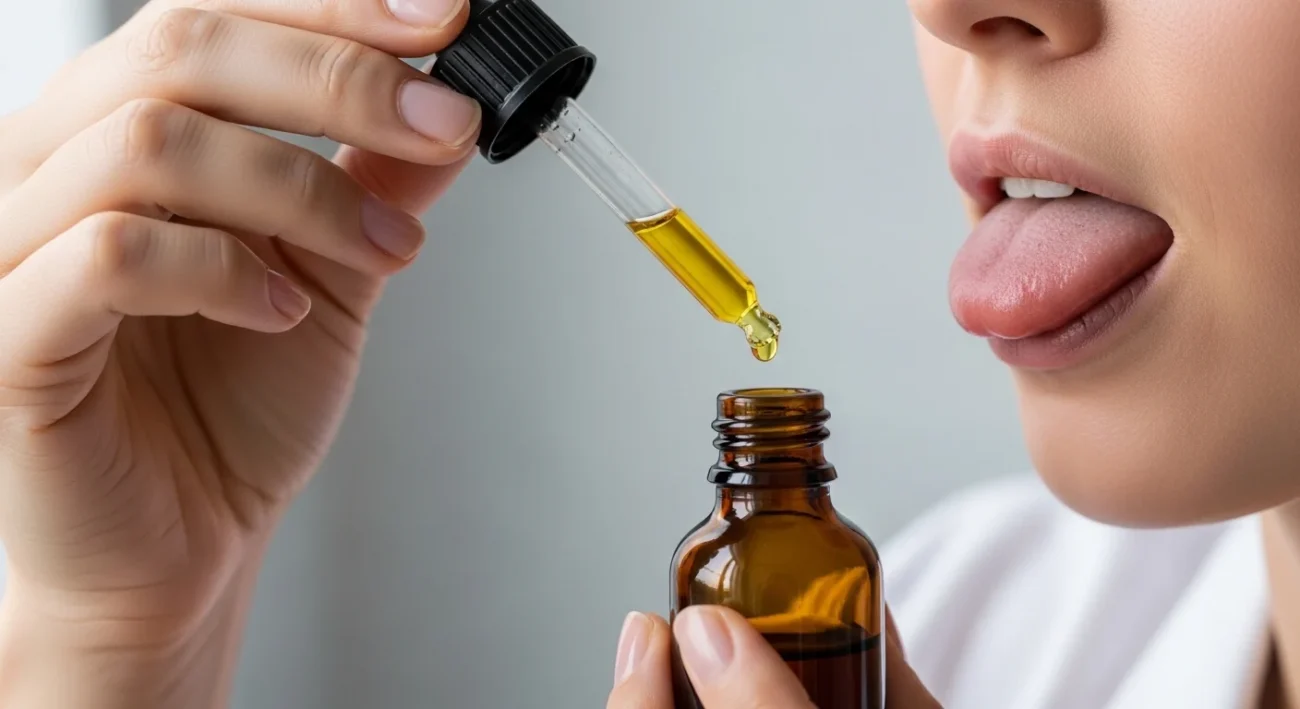
Research on CBD in humans is still ongoing, but the available data is promising. It is important to distinguish between what is supported by solid scientific evidence and what is still at the stage of preliminary study. To better understand how the plant’s life cycle influences cannabinoid production, you can read our guide on the vegetative stage and flowering.
Drug-resistant epilepsy
This is the only use for which a CBD-based drug has been approved by regulatory authorities (FDA in the USA, EMA in Europe): Epidiolex, indicated for some rare forms of paediatric epilepsy such as Dravet syndrome and Lennox-Gastaut syndrome. This is the most solid scientific evidence available on CBD.
Anxiety and stress
Several studies show that CBD can reduce anxiety symptoms in specific situations, such as performance anxiety or social anxiety. Interaction with the 5-HT1A serotonin receptor is thought to be responsible for this effect. Research on chronic use for generalised anxiety is still ongoing. Those wanting to start with a gradual approach can consider the CBDay Light 5% oil, ideal for those approaching CBD for the first time.
Sleep
Some preliminary studies suggest that CBD may improve sleep quality, especially in people suffering from insomnia related to anxiety or chronic pain. The effect would not be directly sedative, but indirect: by reducing anxiety and discomfort, CBD would facilitate falling asleep.
Pain and inflammation
CBD shows anti-inflammatory and analgesic activity in several preclinical models. It is being studied for neuropathic pain, arthritis and chronic inflammatory conditions. For localised topical use — tired muscles, sore joints, recovery after physical activity — the After Sport Cream with Arnica and CBD 700mg combines the action of cannabidiol with that of arnica in a formula specifically designed for sports recovery.
Nausea
CBD has been studied as an antiemetic, especially in the context of chemotherapy-induced nausea. The CBD+THC combination (as in the drug Sativex) has shown more effective results than CBD alone in this area.
CBD in animals: dogs, cats and others
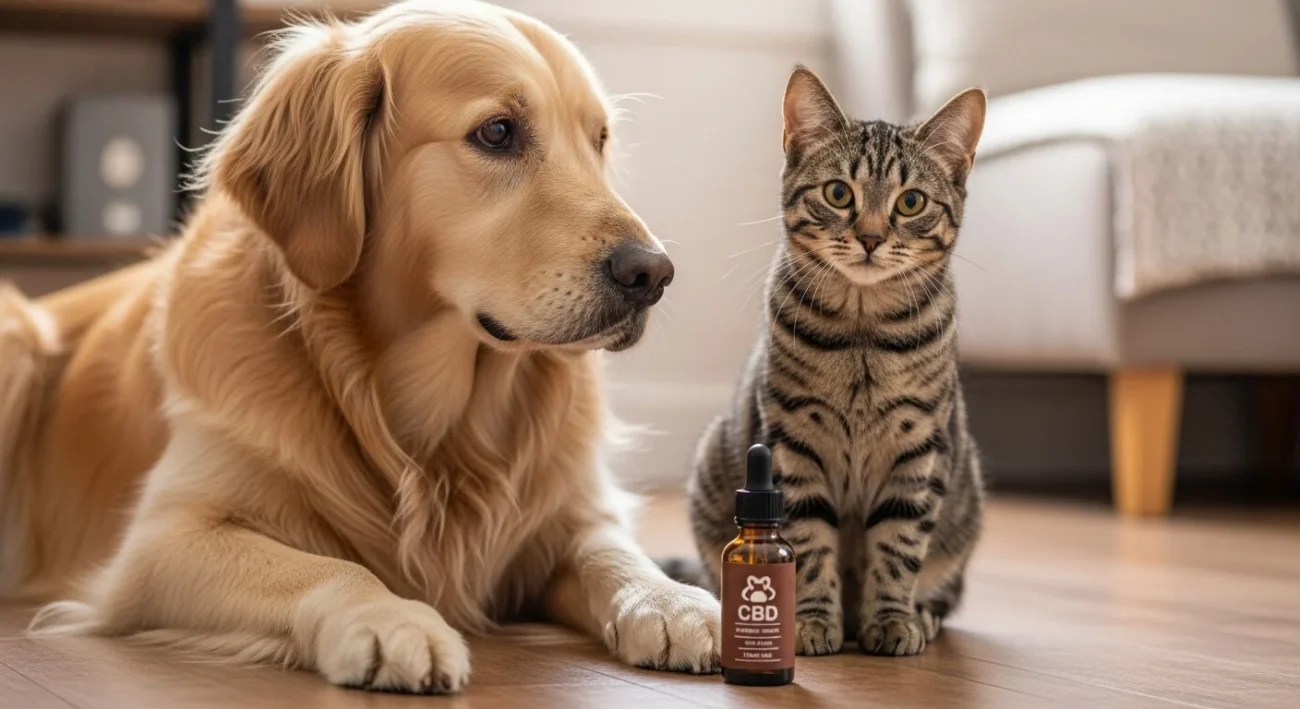
Animals also have an endocannabinoid system. Dogs, cats, horses and other mammals respond to cannabinoids in a similar way to humans, although with some important differences to keep in mind.
CBD for dogs
The dog is the animal on which most veterinary research on CBD is focused. The most studied areas are:
Pain and arthritis: a study published in Frontiers in Veterinary Science showed a significant reduction in pain and an improvement in mobility in dogs with osteoarthritis treated with CBD.
Canine epilepsy: a study from the University of Florida found a reduction in seizure frequency in epileptic dogs treated with CBD, opening the door to further research.
Anxiety: CBD is often used for dogs with separation anxiety, thunder phobia or travel stress. Anecdotal evidence is plentiful, but large-scale controlled studies are still limited.
CBD for cats
Cats have a different physiology from dogs and humans. In particular, their liver has a reduced ability to metabolise certain compounds. For this reason it is essential to use CBD products specifically formulated for felines and at much lower doses than for dogs.
Research on CBD in cats is still in its early stages. The most common uses concern anxiety, chronic pain and inflammatory conditions, but it is always essential to consult a vet before starting any supplementation.
CBD for other animals
CBD is also used for horses (joint pain, anxious behaviour), rabbits and other small mammals. In all cases the rule is the same: species-specific products, appropriate dosages and veterinary supervision.
Forms of CBD: which to choose
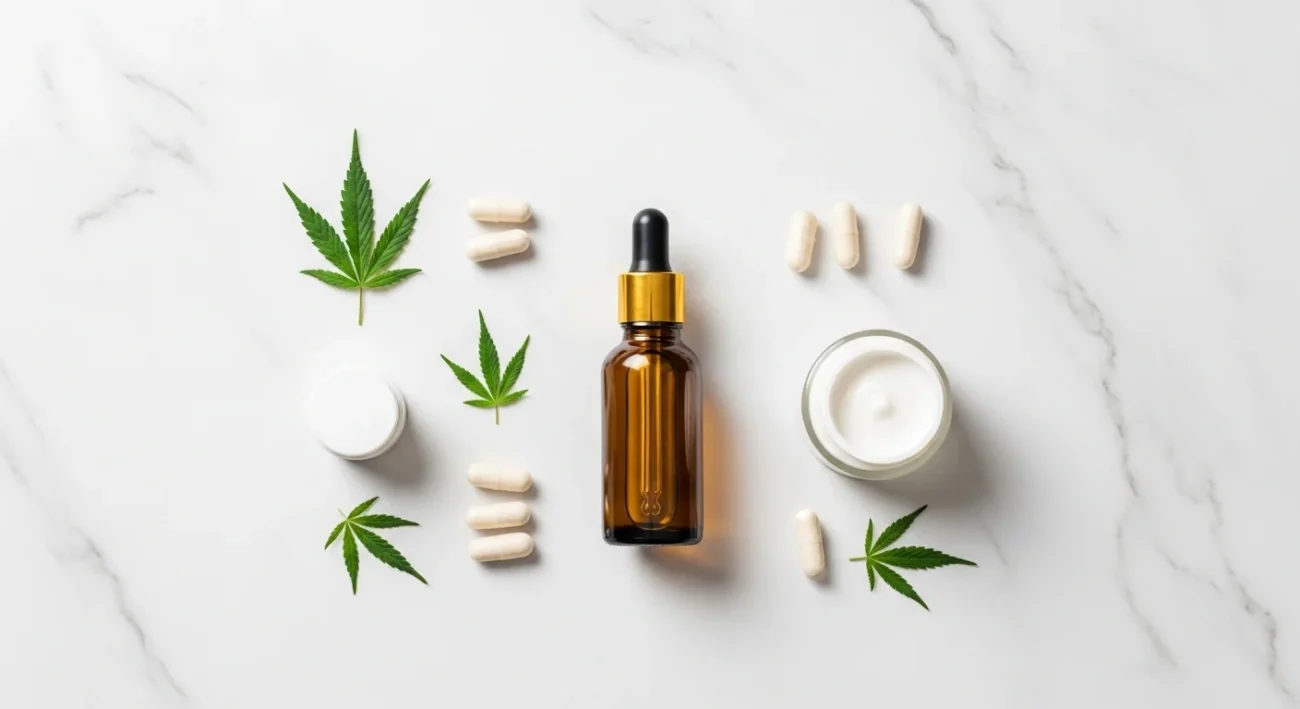
Not all CBD products are equal. The form influences the speed of absorption, the duration of the effect and ease of use.
Sublingual oil: the most common and versatile form. It is absorbed quickly through the mucous membranes of the oral cavity (15-30 minutes). Ideal for daily use in both humans and animals (drops added to food). The Enecta CBDay range covers four concentrations to suit every need: 5% (500mg) for beginners, 10% (1000mg) for regular use, 15% (1500mg) for a more sustained dosage and 30% (3000mg) for those needing high concentrations. For those preferring a pure hemp oil, the Enecta C1000 at 10% and the more concentrated C2400 at 24% are also available.
Capsules: convenient for those wanting a precise and consistent dosage. Absorption is slower (30-90 minutes) as it occurs through the digestive tract.
Creams and topicals: used locally on joints, muscles or skin. They do not enter systemic circulation, so the effect is limited to the area of application. For daily skin wellbeing, the Enecta line offers a moisturising cream with CBD 350mg and an anti-wrinkle cream with CBD 700mg for the face, as well as the face and neck cleanser with CBD 200mg and the body lotion with CBD 200mg for body care.
Pure crystals (CBD isolate): CBD at 99% without other cannabinoids. They can be dissolved in oil, added to creams or vaporised. Ideal for those wanting to precisely control the dose taken.
Pet products: oils, treats and supplements formulated with dosages and flavours suitable for pets. It is always preferable to use specific products rather than human ones. Quality starts with the plant itself: to understand how cannabinoid-rich varieties are obtained, read our guide to autoflowering seeds and ruderalis genetics.
Dosage: how much CBD to use
CBD dosage is one of the most complex and personalised aspects. There is no universal dose: it depends on body weight, the condition being addressed, the form used and individual sensitivity.
For humans, common practice is to start with low doses (5-10 mg per day) and gradually increase until the desired effect is found. This approach is often referred to as “start low, go slow”. An oil like the CBDay Light at 5% is the ideal starting point for this gradual approach.
For animals, the most commonly used reference is 0.1-0.5 mg per kg of body weight, preferably under veterinary guidance. Cats require even more conservative doses than dogs.
It is essential to always read the manufacturer’s instructions and, in cases of specific medical conditions, consult a doctor or vet before starting.
CBD and THC: the main differences
Confusion between CBD and THC is still widespread. Here are the essential differences:
THC: psychoactive, alters perception, can create dependency, is illegal or controlled in most countries, toxic for dogs and cats even at low doses.
CBD: non-psychoactive, does not alter perception, does not create dependency, legal in many countries if extracted from hemp with THC below 0.3%, tolerated by animals if in specific products and at correct dosages.
To explore the differences between cannabis molecules and their aromatic profile, read our complete guide to terpenes.
What to look for when buying CBD

The CBD market is still poorly regulated in many countries, which means product quality can vary enormously. Here are the key criteria to assess:
Certificate of Analysis (COA): every serious product should have an independent laboratory analysis confirming CBD concentration, the absence of pesticides, heavy metals and residual solvents, and THC content.
Type of extract: there are three main categories. The isolate contains only pure CBD. Broad spectrum contains CBD and other cannabinoids but without THC. Full spectrum contains all cannabinoids including a trace of THC (within legal limits) and exploits the so-called entourage effect, meaning the synergy between the various compounds of the plant.
Extraction method: supercritical CO₂ extraction is considered the cleanest and safest. Avoid products extracted with aggressive chemical solvents.
Hemp origin: prefer products from hemp grown in Europe or North America, where agricultural controls are stricter.
CBD and cannabis: the legal context
In most European countries, CBD is legal if extracted from industrial hemp varieties with THC below 0.2-0.3%. Products for topical use or as food supplements are legally available. However, regulations vary by country and are constantly evolving — always verify the current laws in your jurisdiction.
For cannabis plants in general, we recommend reading our article on genetics and autoflowering seeds to better understand the differences between varieties.
CBD: a molecule to understand, not to mythologise
CBD is neither a miracle cure nor a dangerous substance. It is a molecule with a favourable safety profile, a complex mechanism of action and a growing number of scientific evidences supporting some specific uses.
Using it consciously means choosing products with certified quality, starting with low doses, listening to your own body (or your animal’s) and, when necessary, consulting a health professional. Those wanting to explore the cultivation of the plant from which CBD derives can start from our guide to cannabis cuttings, move through organic nutrition with Biobizz and explore Low Stress Training (LST) techniques to maximise plant yield.
The science on CBD is still young. But the results so far are promising enough to justify the attention this molecule is receiving worldwide.
Frequently Asked Questions
Does CBD get you high?
No. CBD has no psychoactive effects. It does not alter perception, does not create euphoria and does not produce the typical effects of recreational cannabis. Those effects are caused by THC, a different molecule. Legal CBD products contain THC below 0.2-0.3%, an amount insufficient to produce any psychotropic effect.
Is CBD addictive?
No. The World Health Organisation (WHO) has assessed CBD as a substance with no potential for abuse or dependency. Available studies show no phenomena of tolerance or withdrawal upon cessation of CBD.
Can I give CBD to my dog or cat?
For dogs there are already several studies showing benefits in certain conditions. For cats the situation is more delicate: their metabolism is different and only products specifically formulated for felines must be used, at much lower doses. In both cases, it is strongly recommended to consult a vet before starting.
How long does it take to feel the effects of CBD?
It depends on the form used. Sublingual oil acts within 15-30 minutes. Capsules require 30-90 minutes as they must be digested. Topical creams act locally within 20-40 minutes. For chronic effects (anxiety, inflammation) consistent use for 2-4 weeks may be needed before evaluating results.
Is CBD legal?
In most European countries, CBD products extracted from industrial hemp with THC below 0.2% are legal. They are sold as supplements, cosmetics or wellness products. Regulations may vary over time, so it is always advisable to check the updated provisions in your country.
What is the difference between full spectrum, broad spectrum and CBD isolate?
Isolate contains only pure CBD (99%+), without other cannabinoids. Broad spectrum contains CBD and other cannabinoids but with THC removed. Full spectrum retains all cannabinoids from the plant including a trace of THC within legal limits, exploiting the entourage effect — the synergy between the plant’s compounds that would enhance CBD’s effects.
Does CBD interact with medications?
Yes, CBD can interact with some medications, particularly those metabolised by cytochrome P450 in the liver (anticoagulants, antiepileptics, some antidepressants). If you are taking medication it is essential to consult your doctor before starting to use CBD, both for yourself and for your pet.
⚖️ Legal Notice and Disclaimer
This article is written exclusively for informational and educational purposes. The information contained does not constitute medical or veterinary advice and does not replace the opinion of a qualified health professional. BuDream does not encourage, promote or facilitate illegal activities. CBD regulations vary by country and jurisdiction. It is the sole responsibility of the reader to verify and comply with applicable local laws. BuDream disclaims all liability for any use of the content that does not comply with the laws in force in the reader’s country.





 Pest control
 Fertilizer
 LED lamp
 Fans and extractors
 Pots
Pots