



Complete Guide to Low Stress Training (LST)
 Claude
 Perplexity
Complete Guide to Low Stress Training (LST)
Low Stress Training (LST) is one of the most effective and safe techniques to increase your garden’s production without overly stressing the plants. In this guide, we’ll see how to bend your cultivation’s destiny toward guaranteed success, starting with choosing the best seeds in our shop.
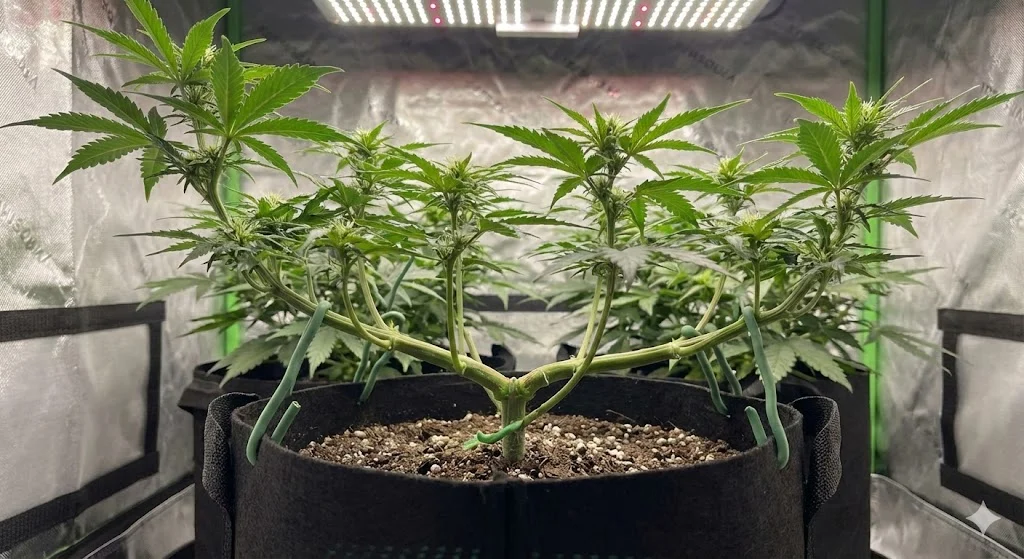
What Is LST and Why Does It Work?
The main goal of LST is to break “apical dominance.” Naturally, plants tend to grow like a Christmas tree, with a single main top. By bending the stem, we force the plant to distribute growth hormones (auxins) evenly across all lateral branches.
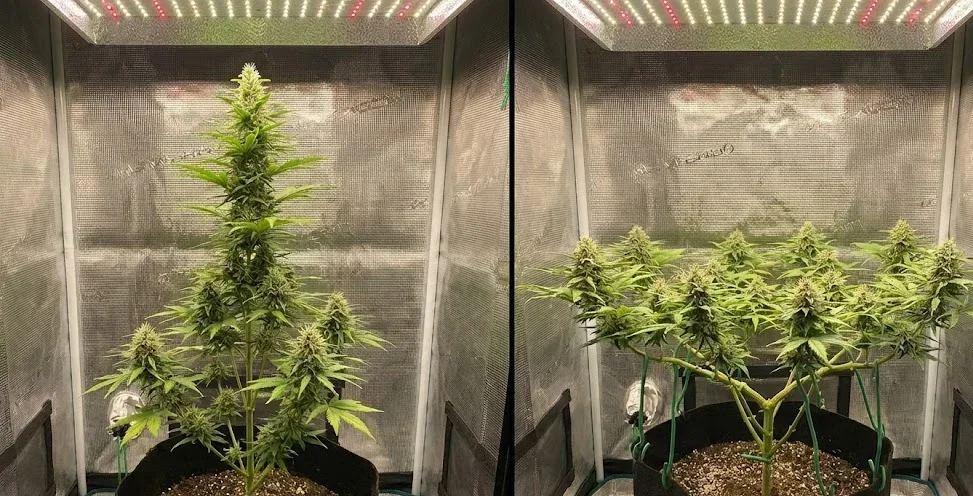
Left Plant (Natural Growth)
-
Vertical Structure: Shows clear apical dominance, typical of Sativa varieties or Sativa-dominant Hybrids, with a very tall central stem pointing directly toward the light.
-
Flower Distribution: Features a single dominant main cola and several smaller, less developed secondary tops on the lower lateral branches.
-
Internodal Distance: The internodes appear more spaced out, reflecting the plant’s natural tendency to seek height.
Right Plant (LST Technique)
-
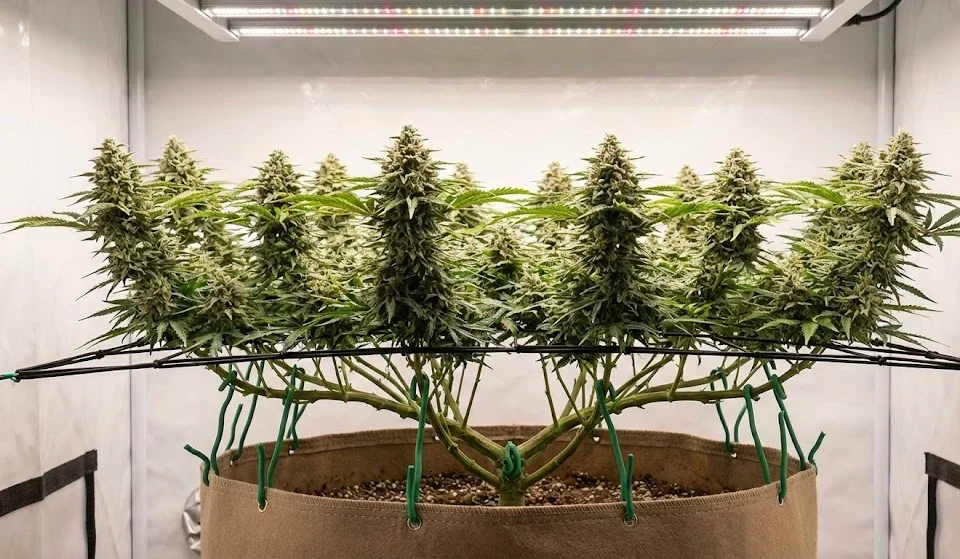
Uniform Canopy: Through the use of ties (visible as green wires pulling branches downward), the plant has been bent to create a horizontal, flat structure.
-
Light Exposure: This technique allows all flowering sites to be at the same distance from the lamp, optimizing photosynthesis for every top.
-
Homogeneous Development: Instead of a single large cola, the plant develops multiple flowers of similar size, potentially increasing yield in spaces with limited height.
Materials Needed for Training
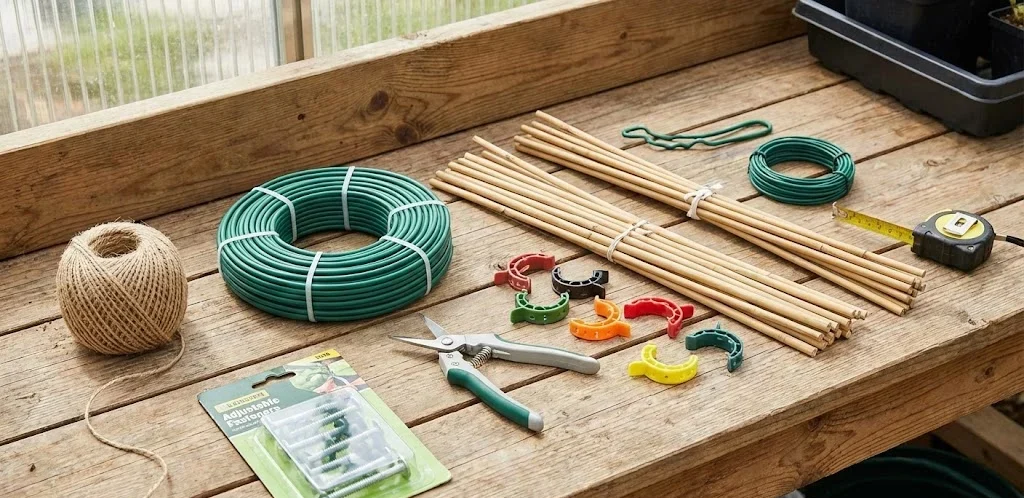
To perform proper LST, you don’t need expensive tools, but it’s essential to choose the right materials to avoid injuring the plant.
- Soft ties: Essential to prevent cutting into stems as they thicken.
- Stakes or clips: To anchor branches to the edge of the pot.
- Scissors: Only for minor defoliation touch-ups if needed.
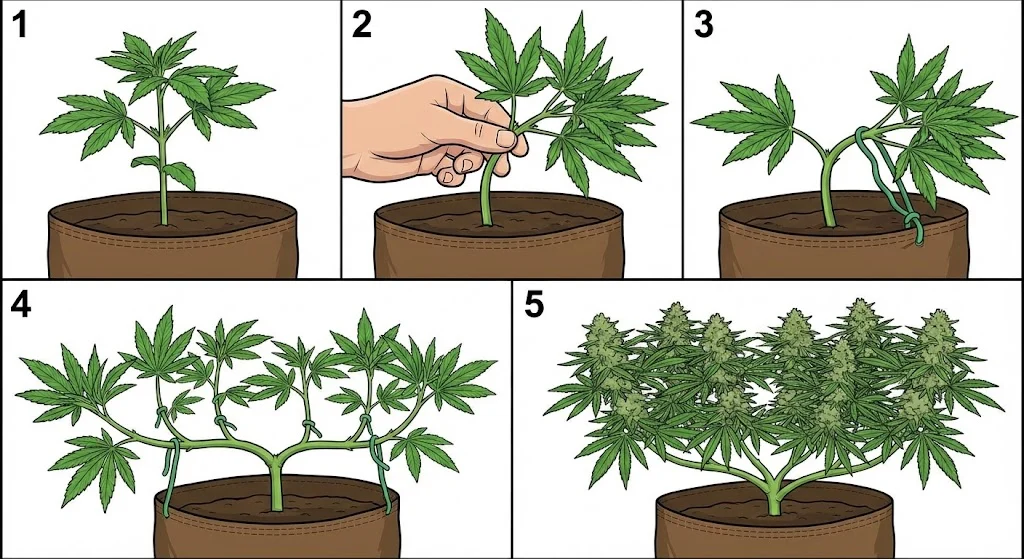
How to Apply LST Step by Step
The key is gentleness. You generally start when the plant has developed 3 or 4 nodes and the stem is still flexible.
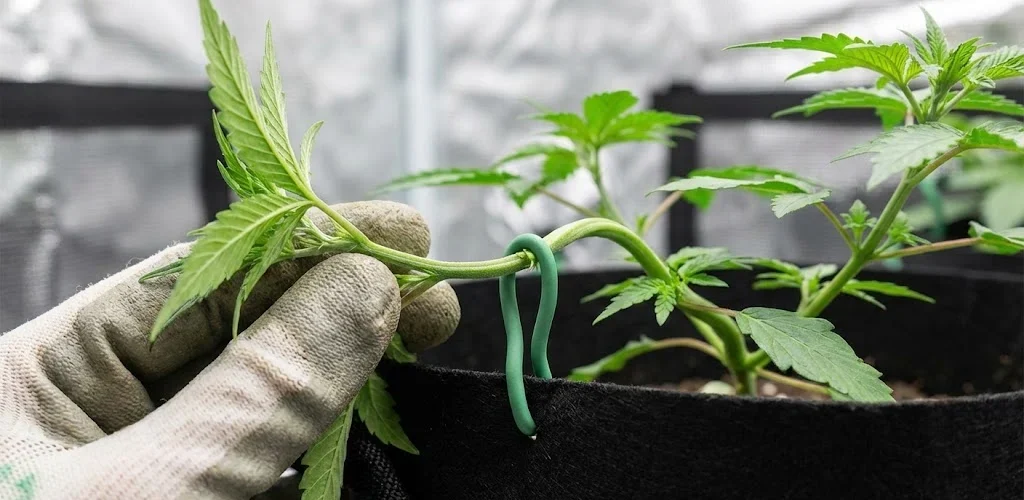
Use your hands to test the branch’s resistance before securing it permanently. If you feel too much tension, stop.
LST on Autoflowering Varieties
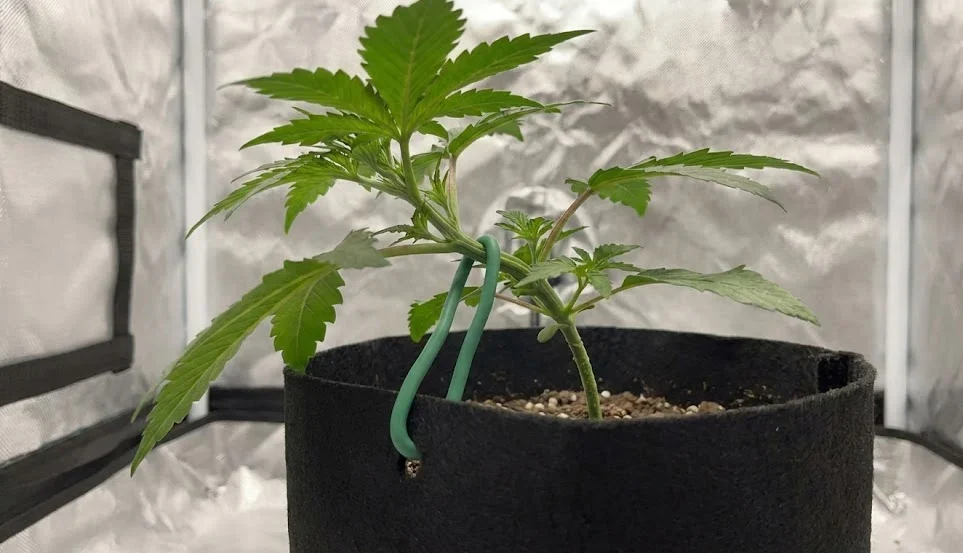
Autoflowers have a short life cycle and don’t tolerate high stress (such as topping). LST is the perfect technique for them, as it doesn’t halt growth but maximizes its potential. If you want to learn more about the nature of these plants, read our Complete Guide to Ruderalis Genetics.
Recommended Genetics for LST: For best results, we recommend choosing vigorous and resilient varieties. You can find a wide selection of autoflowering seeds here, or browse the catalogs of top brands:
- Productive varieties like Auto Mandarina or Auto Caramel Bud from SeedSalad.
- USA genetics from FastBuds, such as Guava Auto or Frostbanger Auto.
- The great classics from Sweet Seeds: Tropicanna Cherry XL or Super Boof XL Auto.
- The stability of Humboldt Seed Company with Jelly Donutz Auto or OG Triploid Auto.

Combined Techniques: LST, Topping, and SCROG
Experienced growers often combine LST with other methods to achieve an even denser and more productive canopy.
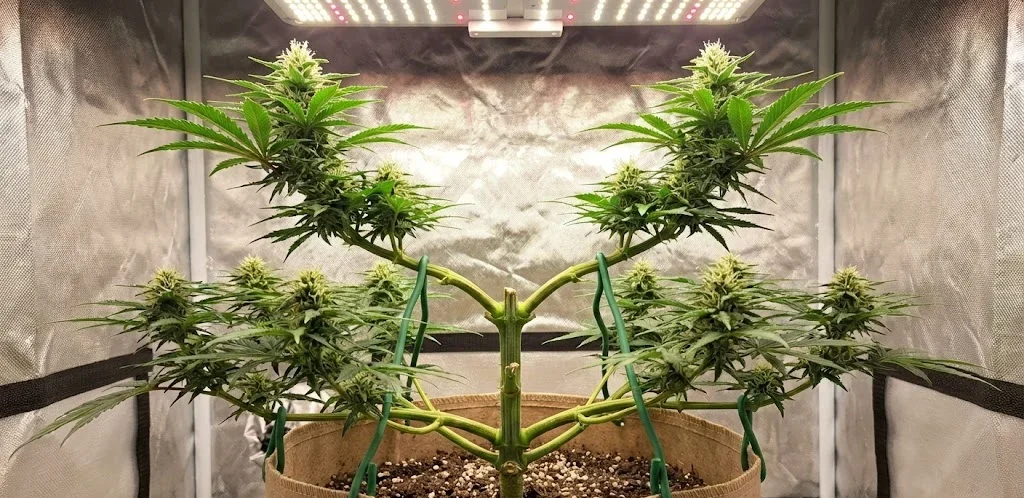
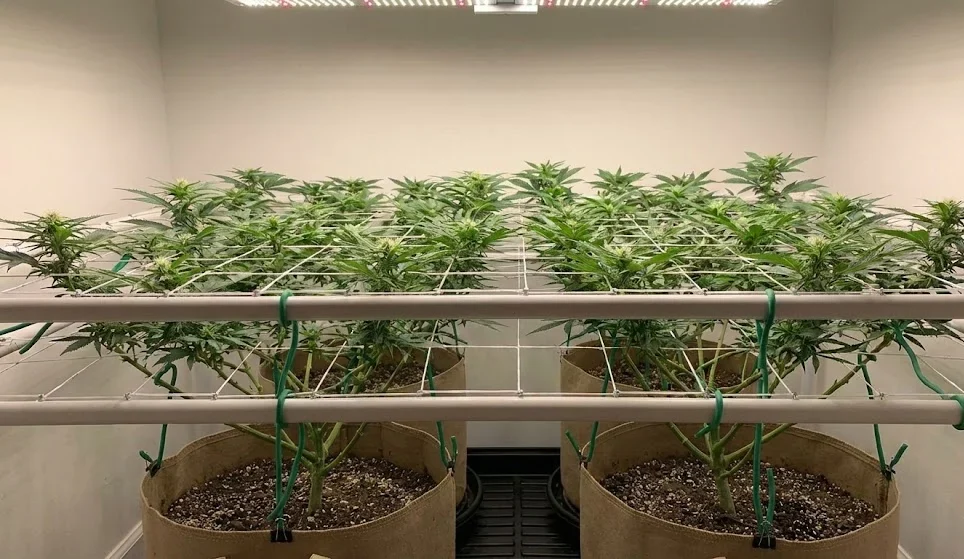
Using a net (SCROG) together with LST ties allows you to perfectly fill every corner of the growing space.
Common Mistakes to Avoid
Despite being a “low stress” technique, it’s easy to make mistakes if you rush.
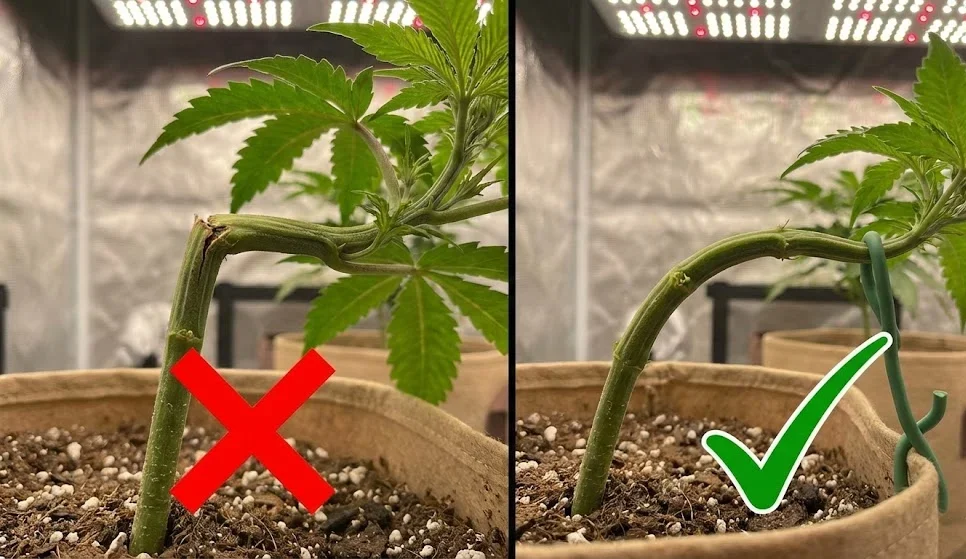
1. Excessive bending: If the stem is too rigid, you risk snapping it. If it happens, use adhesive tape to repair the wound immediately.
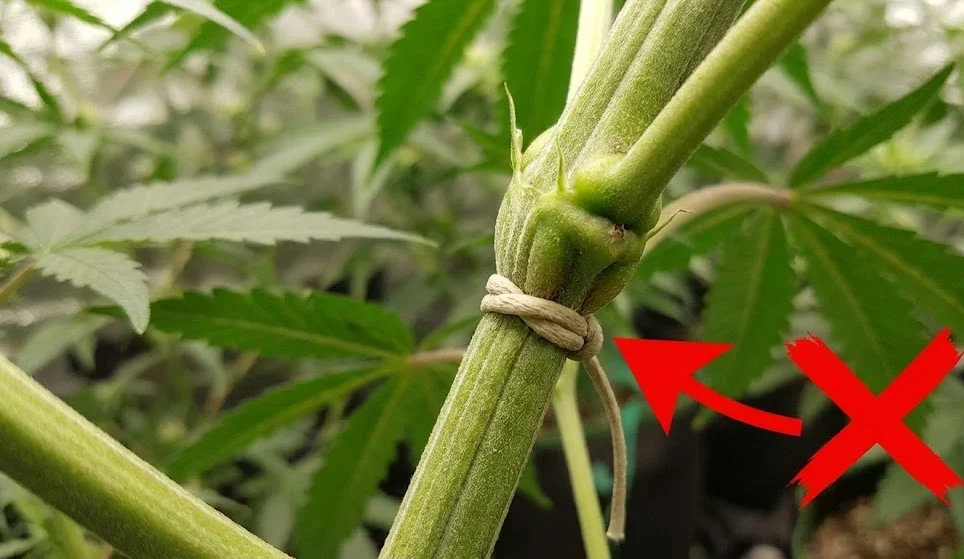
2. Ties that are too tight: The stem will increase in diameter during growth. If the tie is too tight, it will strangle the plant, blocking nutrient flow.
The Final Result: A Uniform Canopy
If done correctly, LST transforms your plant into a uniform expanse of mature tops, ready for an abundant, high-quality harvest.
Now that you know all the secrets of Low Stress Training, all that’s left is to start shaping your plants by choosing the perfect genetics from our Cannabis Seeds!
Disclaimer and Legal Notes
Informational note: The techniques described in this article are for illustrative, educational, and informational purposes only. Cannabis cultivation is subject to legal regulations that vary significantly from country to country (and, in some cases, from region to region).
Budream does not encourage, promote, or solicit in any way illegal activities or the violation of current laws. We strongly urge every reader to carefully verify the legislation in their territory before undertaking any cultivation activity. The user assumes full and total responsibility for the use of the information provided in this guide.





 Pest control
 Fertilizer
 LED lamp
 Fans and extractors
 Pots
Pots