



THC in the Blood
 Claude
 Perplexity
If you use cannabis and are facing a drug test, you are probably wondering how long it takes to test negative. This is a perfectly legitimate concern, especially as drug screenings are becoming increasingly common in workplace, medical, and legal environments. The uncertainty surrounding test outcomes can be highly stressful, particularly when your job or driver’s license is at stake.
THC, the active compound in cannabis responsible for its psychoactive effects, behaves differently from many other substances because it accumulates in the body. As a result, elimination times vary significantly from person to person, making it impossible to give a single, universally valid answer.
Understanding detection times, testing methods, and the factors that influence results can help you better assess your situation and avoid unpleasant surprises.
THC in the Blood: Short Detection Time, High Relevance
THC remains detectable in the blood for a relatively short period compared to other bodily fluids. For occasional users, THC is often no longer detectable after about 24 hours. Regular users may test positive for three to five days, and in cases of heavy or prolonged use, the detection window can be even longer.
This happens because active THC is rapidly metabolized by the liver and converted into other compounds. It circulates in the bloodstream briefly before being redistributed into tissues, particularly fat tissue.
Because of this limited detection window, blood tests are not commonly used for workplace drug screening. They are more frequently employed in roadside checks and clinical settings, where the goal is to determine whether cannabis was consumed recently and whether its effects may still be present.
When Blood Tests Are Used
Law enforcement primarily uses blood tests during traffic stops, as THC in the blood indicates recent use and potential current impairment. In hospital settings, blood analysis can help determine whether a patient has consumed cannabis in the hours prior, which may be relevant for diagnosis or treatment decisions.
Legal thresholds and penalties vary widely by country, so it is essential to be familiar with the regulations in your specific jurisdiction.
THC in Urine: Longer Detection, Greater Variability
Urine tests do not detect THC itself, but rather its metabolites, mainly THC-COOH. This compound is produced when the liver breaks down THC and is eliminated slowly through the kidneys. These metabolites remain in the body much longer than active THC, leading to extended detection times.
Average detection windows are generally as follows:
Occasional use: 3–7 days
Moderate use (a few times per week): 7–18 days
Regular use (almost daily): up to 30 days
Chronic use (multiple times per day over long periods): 35–50 days or longer
These values are averages. In practice, some individuals eliminate THC much faster, while others may remain positive for 60 to 90 days after their last use, particularly in cases of long-term heavy consumption.
“I Smoked One Joint—How Long Will It Stay in My Urine?”
If cannabis use was truly an isolated event and you had not consumed for weeks or months beforehand, you may test negative within three to five days. However, if your body already contains stored metabolites from previous use, even a small amount can significantly extend the detection window.
A useful analogy is a sponge: if it is already partially soaked, additional liquid takes longer to absorb and release. Potency also matters. Modern cannabis strains often contain much higher THC concentrations than in the past, meaning that even a single use can introduce a substantial amount of THC into the body.
Factors That Influence Test Results
The outcome of a drug test is not determined solely by how much cannabis you consumed. Several variables influence how quickly THC is eliminated.
Frequency of use is one of the most important factors. Regular consumption leads to THC accumulation in fat tissue, creating a reserve that the body must gradually eliminate. Dosage also plays a role, as higher intake results in greater metabolite production. The method of consumption matters as well, since edibles are metabolized differently than smoked cannabis.
Individual metabolism varies based on age, genetics, hormonal balance, and overall health. People with faster metabolisms tend to eliminate THC more quickly. Body fat percentage is another key factor because THC is fat-soluble. Interestingly, rapid weight loss shortly before a test may temporarily increase THC levels in the blood as stored THC is released.
Test sensitivity is also critical. A cutoff of 20 ng/mL will detect much lower concentrations than a cutoff of 50 ng/mL, potentially making the difference between a positive and a negative result. Hydration can dilute urine but does not accelerate elimination, and excessive dilution can be detected by laboratories. Physical activity supports long-term metabolic health, but intense exercise shortly before a test may release stored THC and should generally be avoided.
How THC Tests Work
Rapid Screening Tests
Most initial screenings use immunoassay tests. These are common in workplaces, sports, and routine checks. The standard cutoff is usually 50 ng/mL, although some tests use different thresholds. If metabolite levels are below the cutoff, the result is negative.
These tests are fast, inexpensive, and easy to administer, but they are not infallible. False positives can occur due to cross-reactivity with other substances.
Confirmatory Tests
If a rapid test is positive, confirmatory testing is typically performed using gas chromatography–mass spectrometry (GC-MS) or liquid chromatography–tandem mass spectrometry (LC-MS/MS). These methods are considered the gold standard in toxicology.
Confirmatory tests use lower cutoffs, often around 15 ng/mL, and drastically reduce the risk of false positives by precisely identifying the substance present. If you believe a rapid test result is incorrect, you have the right to request confirmatory testing.
How Long Does It Take to Eliminate THC Completely?
There are no shortcuts or reliable ways to rapidly eliminate THC. The body needs time to process and remove stored metabolites. Products marketed as “detox” solutions are largely ineffective and, in some cases, potentially harmful.
As a general estimate, occasional users may clear THC within three to four days, moderate users within one to three weeks, and regular or chronic users within thirty to fifty days or longer. A healthy lifestyle supports overall metabolism but does not produce immediate results before a test.
Urine, Blood, Saliva, and Hair: Key Differences
Urine testing has the longest detection window and is most commonly used in workplace screening. It detects past use but does not indicate current impairment. Blood testing has a short detection window and is useful for identifying recent use and possible intoxication. Saliva testing typically detects cannabis use for 24 to 72 hours and is increasingly used for roadside checks. Hair testing can reveal cannabis use over several months, usually up to 90 days, but does not indicate recent use or impairment.

How to Prepare for a Drug Test
If you know a test is coming, stopping cannabis use as early as possible is the most effective step. The more time that passes between last use and testing, the greater the likelihood of a negative result. Maintaining balanced nutrition, adequate hydration, and sufficient rest supports healthy metabolism. Avoid drastic changes such as extreme dieting or intense exercise in the days immediately before the test.
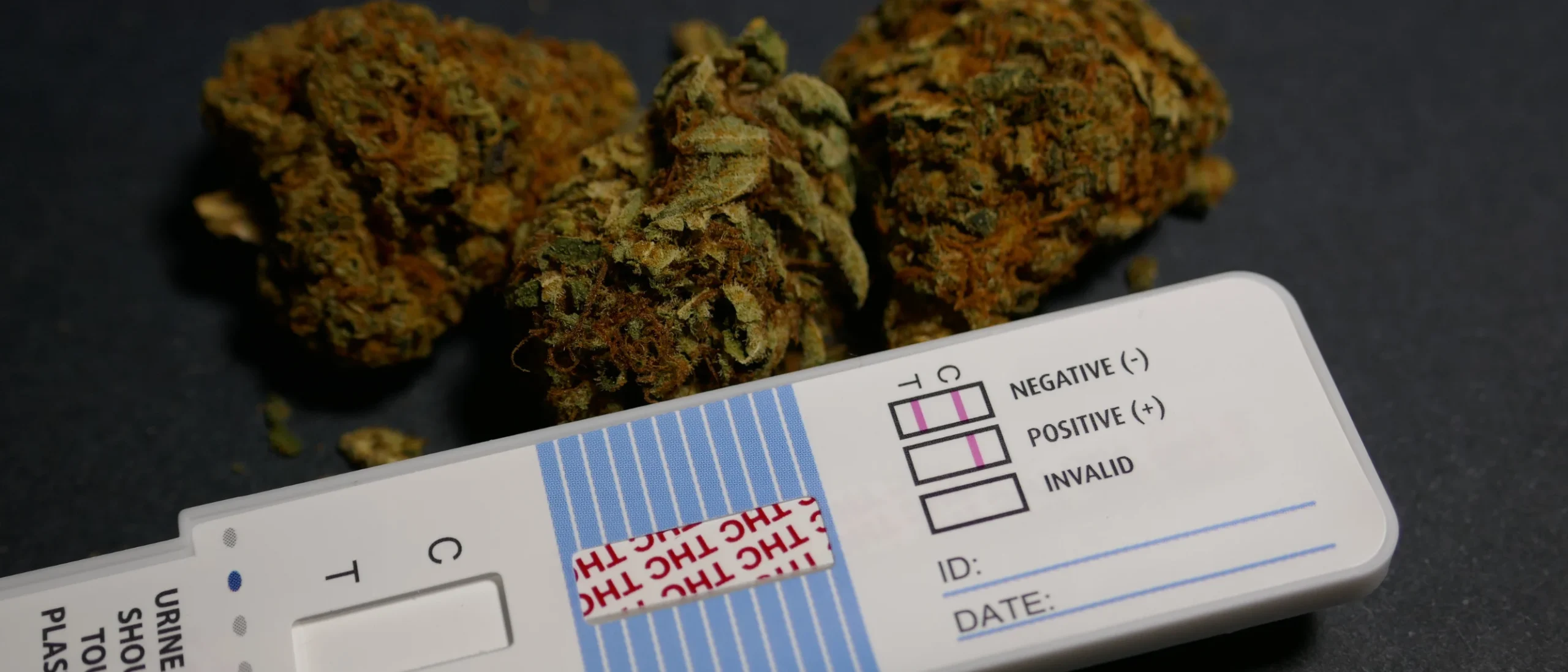
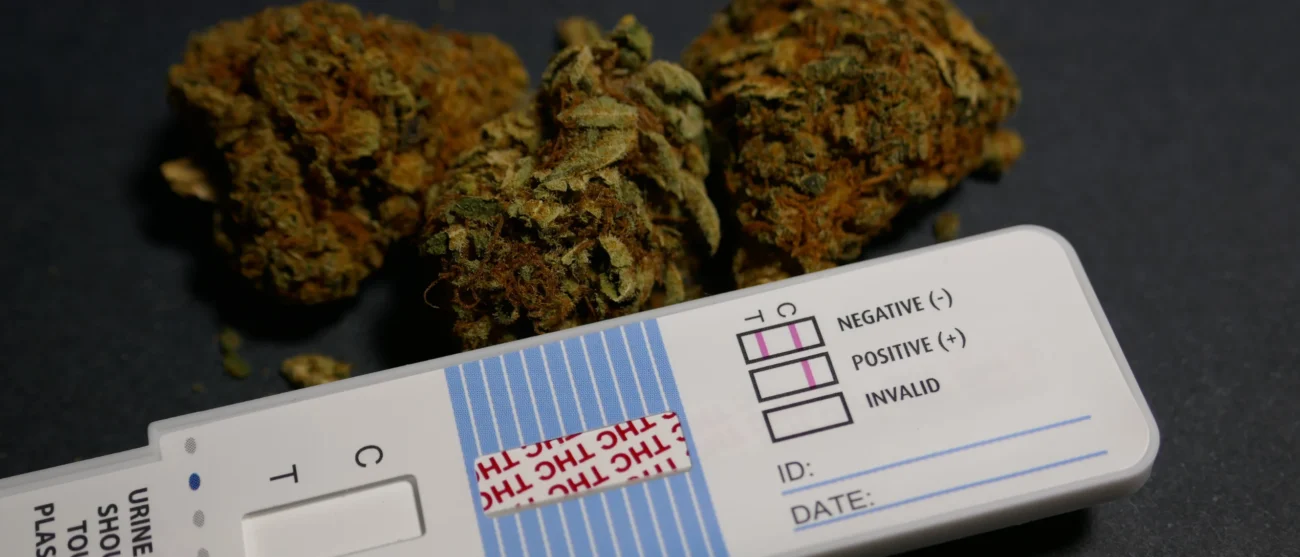
At-home screening tests can provide a general indication of your status, but cutoff levels may differ from laboratory tests, so results should be interpreted cautiously.
Conclusion
There are no guaranteed shortcuts. The only reliable way to test negative is to allow the body enough time to naturally eliminate THC. Detection times are influenced by many individual factors, and experiences vary widely from person to person.
If you are subject to regular testing, abstinence remains the safest option. If you find yourself facing an unexpected test, understanding how THC is processed and detected can help you make informed decisions and interpret results accurately.
This article is for informational purposes only and does not replace medical or legal advice. Cannabis laws and testing standards vary by country and are subject to change. In case of doubts or positive test results, consult a qualified medical or legal professional familiar with the regulations in your jurisdiction.






 Pest control
 Fertilizer
 LED lamp
 Fans and extractors
 Pots
Pots